

Hair Transplant After Care and Recovery Guide
After a hair transplant in Dubai, recovery takes about ten to fourteen days. A patient’s transplanted scalp may be red, scabby, and swollen throughout the healing process. These symptoms take ten to fourteen days to go away.
Hair transplants have increased dramatically over the last ten years as a result of many prominent celebrities publicly discussing their previous operations and branding the surgery as socially acceptable. It makes hair transplants a popular procedure that many people look forward to.
You’ve made significant progress in regaining your hair and confidence after years of hair loss. From extensive research to determining the number of hair grafts required, you have completed every step required to have an FUE hair transplant.
You may have experimented with various non-surgical hair loss therapies, but you’ve finally made up your mind and are headed for an FUE hair transplant. The time has come to begin considering your hair transplant recovery and aftercare.
FUE Hair Transplant Aftercare
Even though a hair transplant is a very simple treatment that usually lasts a day, the recovery and aftercare phase is an important aspect of the procedure and should be handled as such.
From potential side effects to the dos and don’ts throughout the recovery phase, there are several variables to take into account. We will go over the whole aftercare and recovery process in this blog, including any potential side effects and answering any questions you might have about things like going back to work or cleaning your freshly transplanted hair.
Aftercare for a hair transplant is carefully customized for the patient, just like all other procedures offered by Hortman Clinics. We want to answer all of your questions before the advanced hair restoration Dubai, but if you still need more information or guidance, don’t hesitate to ask during the initial appointment.
The Hair Transplant Consultation
Before the operation even starts, the aftercare procedure begins. Once we establish a point of contact, we will invite you for an initial consultation. One of our skilled surgeons will walk you through the process and evaluate your hair throughout the consultation to create a completely customized hair transplant plan.
We hope that our consultation for hair transplants will help you better understand what an FUE hair transplant involves and provide you with the recovery and aftercare advice you need to have a successful patient experience.
A time and date for your FUE hair transplant procedure will be set when the consultation is over and a strategy has been decided upon. A patient must consider how long recovery will take and ensure that the procedure and follow-up don’t conflict with work.
The Day Of The FUE Hair Transplant Procedure
Our unmatched patient journey is something we at Hortman Clinics are proud of. Here’s what to expect on the day of your procedure:
- Our welcoming staff will welcome you when you arrive.
- You and your surgeon will go over the process once more in the morning.
- We provide you with a variety of activities to help you unwind.
- You will receive numbing injections to anesthetize the back of your head and the area that will receive new hair, as well as pills for comfort.
- We start by delicately removing the follicles from your head’s donor region.
- To protect the hair follicles, they are chilled on petri dishes. To create the density and hairstyle a patient wants, we divide them into bundles.
- It is lunchtime. We accommodate any dietary needs, which we will learn about from you before the procedure.
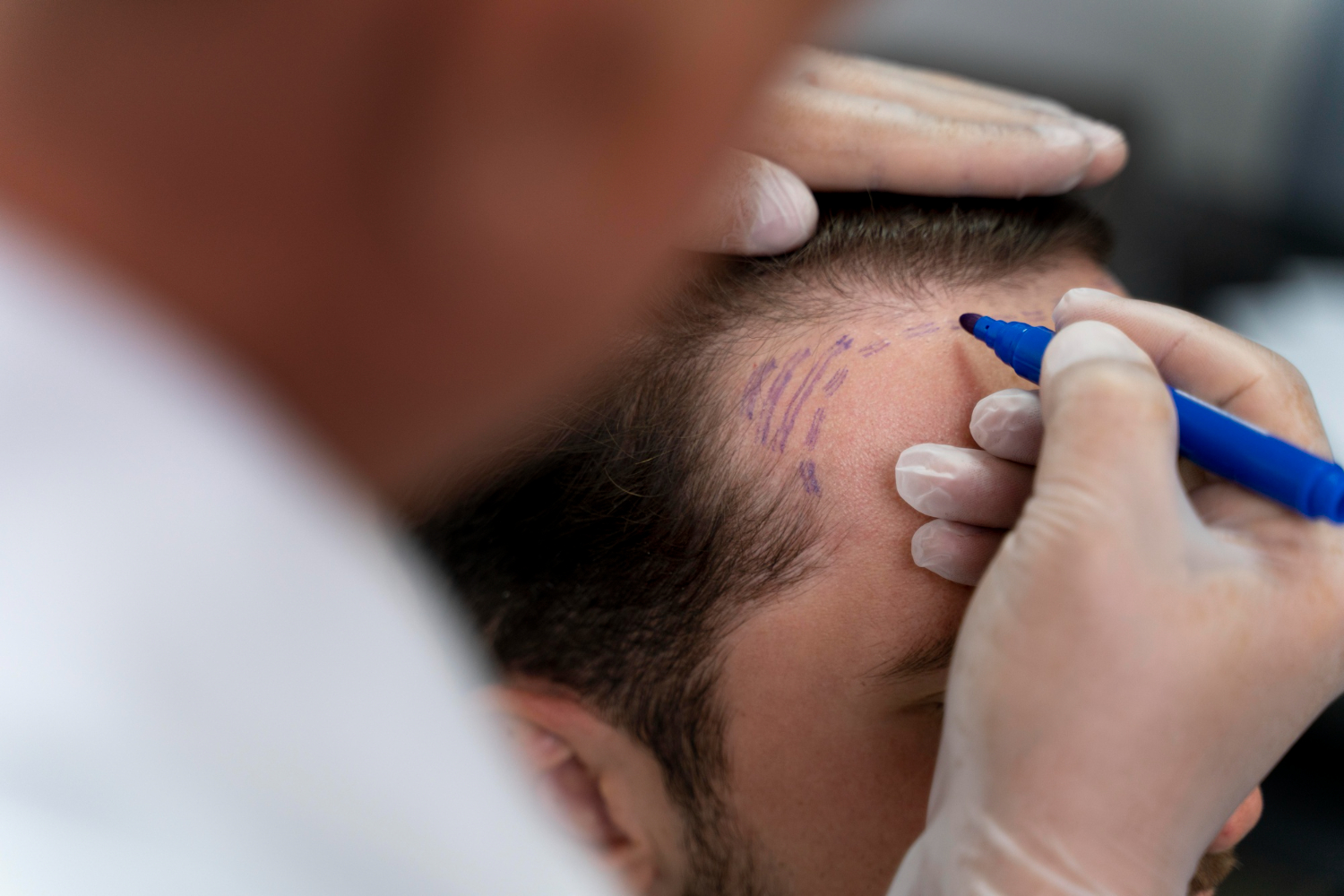
- To guarantee your complete satisfaction, we map out the ideal hairline or region that has to be populated before starting the hair transplant.
- Hair follicle implantation starts once the targeted scalp region is numbed once again.
- They are positioned with care to complement the density and direction of your natural hair, which will gradually grow into the style you choose.
What Happens After FUE Hair Transplant Surgery?
The patient will be able to observe the form of their new hairline as soon as the follicles are visible following the procedure. After the procedure, we will prepare the patient for hair transplant recovery and aftercare.
We provide an unmatched service that guarantees the patient gets the greatest protection, treatment, and direction available. This includes:
- To keep the tiny incisions free of dirt and dangerous germs, bandage the extraction zone. Additionally, we advise leaving the bandage on until at least the next morning.
- We recommend supplying a cap to protect your hair from the weather for the next few days.
- The surgeon will provide an aftercare package that includes all the necessary drugs and supplies to maintain the healthiest possible state for your hair and head.
- Comprehensive guidelines will be provided for maintaining your new hair.
- If necessary, follow-up consultations will be scheduled to monitor progress
- Our surgeons are available to address any inquiries you may have during your recovery period.
- Review and follow-up after a year
A patient can begin the healing process at home once we have given them all the information they need for aftercare.
We actively encourage all of our patients to submit before and after photos of their recuperation for assessment, and we strive to routinely check in with them to see how their hair growth journey is progressing. This allows patients to ask additional questions they may have.
FUE Hair Transplant Aftercare Package
A crucial component of the process is Hortman Clinics’ customized aftercare package, which provides patients with the resources and knowledge they need to recover from the treatment quickly and efficiently.
We consider each person’s needs for at-home aftercare and include comprehensive instructions outlining all the necessary information.
To protect your hair, it’s important to minimize stress wherever you can because it contributes to the deterioration of hair follicles. We make every effort to guarantee that your recuperation is stress-free.
We are there for you at every stage, even after the procedure, thanks to Hortman Clinics’ patient-tailored aftercare procedures. Our staff of qualified experts and surgeons is available to address any concerns and provide answers to any questions you may have. If necessary, they can arrange a check-up visit and offer you advice on how to move forward.
FUE Hair Transplant Recovery
The surgical technique used has a full impact on the recuperation period. The first healing period following an FUE hair transplant is short and comparatively painless (10–14 days), in contrast to other hair transplant procedures.
This benefit comes from the fact that FUE is less invasive than FUT, which takes out a strip of skin from the donor area instead of just individual hair follicles.
How Long Does It Take To Recover From FUE Hair Transplant Surgery?
The patient will begin to notice the outcomes immediately following the procedure. However, the donor area will be raw and scabbing, so it may not look as good as desired. Naturally, though, the outcome will alter as the healing process progresses. Swelling is another possibility, but it will disappear in five to seven days.
The healing period is one of the primary issues with FUE hair transplants. Before returning to their regular lives, we encourage patients to rest for at least four to five days. While convalescence typically takes around two weeks, most patients recover in about seven days. Although you can go back to work right away following the surgery, we advise taking four to five days off to allow your hair to heal properly and lessen the damage that the weather may do.
Hair Transplant Recovery Timeline
Be cautious since the hair transplants won’t be totally stable for the first two weeks following your procedure. Any brain injuries sustained during this time might negatively influence the final result.
We advise reducing exercise during the first two weeks of recuperation just to be cautious. Additionally, this lessens the accumulation of perspiration and grime in the exposed regions. To aid in the healing process, patients must take the prescribed medicine as needed. Make sure you carefully follow our surgeon’s postoperative recommendations as you progress through the healing process.
Any bandages can be taken off one to five days after surgery, but you should avoid touching the recipient region or the grafts. Your scalp will be most vulnerable to harm during this period, so be certain you wear a hat to protect it. It’s crucial to follow our sleep and medication guidelines to try and minimize any apparent swelling that may occur around the eyes or on the forehead during this period. Compared to other hair loss treatments, choosing to get an FUE hair transplant does imply that the little incisions made in the donor area will heal more rapidly. Within five to seven days, the majority of patients will have a healed donor region.
Patients will be allowed to wash their hair gently on day five. The aftercare package will include a comprehensive set of instructions. The grafts would have been used to the transplanted location by this point, making them less susceptible to dislodgement. You still need to be cautious, though, since there can be scabs, so avoid scratching or irritating your scalp.
It is anticipated that the transplanted hair would fall out after two weeks. Don’t worry, though; this is typical, and it will begin to regrow.
New hair will begin to grow after three to four months, giving the patient a fuller appearance.
Ultimately, you should see the results after 12 to 18 months. The eagerly awaited, thrilling final results will be on display, allowing you to confidently flaunt your new hair and take advantage of all the advantages of having a full head of hair. However, make sure you adhere to the rules established by our skilled surgeons. Please do not hesitate to contact us if you have any questions or concerns regarding the recovery procedure.
How Long Do FUE Hair Transplant Results Last?
Depending on the procedure’s quality, the outcomes of FUE hair transplant surgery may be permanent. Before and after hair transplant Dubai results showcase natural-looking hair growth, improved density, and visible confidence transformation with expert care. After the FUE procedure, the first transplanted hair will fall out in two to three weeks, and over the course of three to fifteen months, the hair in the treated regions will come back thicker and healthier.
Because the hairs in this location are inherently resistant to the process of hair loss, the extraction site on the back of the head is sometimes referred to as the “permanent zone,” making it a popular donor spot.
If a skilled and knowledgeable physician performs the procedure, the results from an FUE hair transplant can last a lifetime. The hair around the transplant may continue to fall out, even though the freshly transplanted hairs could stay forever.
A variety of other non-surgical hair loss therapies that can help stop hair recession are also recommended to certain patients at Hortman Clinics. In order to slow down the pace of hair loss following a hair transplant, we occasionally advise continuing to utilize these therapies.
Furthermore, certain individuals may choose to undergo a second hair transplant. More and more patients are choosing to get another transplant, often within ten years after their first treatment. There are several reasons for this, including:
- Decrease in the diameter of their hair shafts
- Persistent hair loss away from the primary hair transplant site
- Additional environmental or genetic variables
Please consider using our website to schedule a consultation if you require a second hair transplant or would like further information. Our skilled surgeons would be pleased to examine your hair’s condition and explain the procedure to you.
Hair Transplant Side Effects
Hair loss can be effectively addressed over the long term using FUE hair transplants. Research and advancements in the process have made hair transplants a less intrusive and safer choice for the general population over time.
However, it is still a medical operation that requires surgical scalp incisions and the use of anesthesia. Even though a hair transplant is regarded as a less intrusive treatment, patients still need to consider some risks and adverse effects.
The following are possible short-term adverse effects:
- Swelling
- Bleeding
- Scabbing
- Itching
- Infections
- Short-term hair loss in surgically treated regions
Hair Transplant Considerations
With a very high satisfaction percentage, hair transplants are often a safe procedure. However, there is always a list of dos and don’ts that you should follow for your health and safety during the recovery and aftercare phases, just as with any medical treatment.
According to the aftercare and rehabilitation guidelines by the best hair transplant clinic in Dubai, some routines should be suspended, and some behaviors should be avoided.
Here are some things to think about:
- For seven to ten days following surgery, sleep upright on a comfortable cushion rather than on your stomach.
- For at least two weeks, refrain from engaging in any physically demanding activities, such as going to the gym.
- Following surgery, avoid direct sunlight for at least two weeks.
- Don’t wash your hair for at least five days.
- Steer clear of strong shampoos.
- Avoid drinking for seven days before the procedure.
There are several factors to take into account throughout the healing and aftercare phase, just as with any operation. Nonetheless, one of the primary advantages of a hair transplant is that the recuperation process is simple and somewhat painless, and the instructions are simple to follow.
Following the procedure, all inquiries will be addressed, and each patient will receive comprehensive information on all they require.
Hair Transplant: A Simple Process That Will Put Your Fears To Rest
We make every effort to make you feel as comfortable as possible throughout the procedure.
The guiding principle provided by the best hair transplant clinic Dubai is to provide each patient with individualized treatment.
1. A Hair Transplant Consultation With Our Surgeons
We’ll go over the entire procedure and examine your hair under a digital microscope. There are absolutely no difficult sales.
2. One-Day Hair Transplant Procedure
You can return home following surgery, which is often completed in a single day.
3. Regular Hair Transplant Follow Up
We are always here to answer any questions you may have while your new hair grows.
FUE Hair Transplant Surgery At Hortman Clinics
Hortman Clinics surgeons ensure that your transplanted hair has the best chance of growing by performing very successful hair transplants and non-surgical procedures that are completely customized to the patient’s demands. Patients all across the world have trusted us with their hair’s long-term maintenance because of our expert service.
We at Hortman Clinics know that this operation might cause some anxiety, but don’t worry—our highly skilled surgeons will be there to support you throughout the whole process and make sure you get the finest care possible before, during, and after the procedure. As long as they adhere to the guidelines, we offer each patient a thorough aftercare and rehabilitation plan that ensures they will get the greatest outcomes.
Please consider using our website to schedule an appointment if you are interested in receiving an FUE hair transplant and would like additional information. Our doctors will be happy to guide you through the whole process, including recuperation and aftercare. They will assess the condition of your hair and respond to any queries you may have. Schedule a consultation to learn more.
FAQs
How long does recovery take after a hair transplant?
Hair transplant recovery usually takes about 7 to 14 days for initial healing. Mild swelling, redness, and scabbing are normal during the first week. Most patients can return to work within a few days, while full results develop gradually over 6 to 12 months as new hair grows.
What should you avoid after a hair transplant procedure?
After a hair transplant, avoid touching or scratching the scalp, heavy exercise, smoking, and direct sun exposure for at least 7 to 10 days. These activities can interfere with healing and affect graft survival. Always follow your surgeon’s aftercare instructions for the best results.
When can you wash your hair after a hair transplant?
Hair washing usually starts 24 to 48 hours after the procedure, depending on your doctor’s advice. Gentle washing with a prescribed shampoo helps keep the scalp clean without damaging the grafts. Avoid strong water pressure or rubbing the scalp during the first week.
Is shedding normal after a hair transplant?
Yes, temporary hair shedding—known as shock loss—is a normal part of the recovery process. The transplanted hairs often fall out within the first few weeks, while the follicles remain healthy. New, permanent hair growth typically begins within 3 to 4 months.
How can you speed up hair transplant healing and recovery?
You can support faster recovery by following aftercare instructions, keeping the scalp clean, staying hydrated, eating a balanced diet, and avoiding smoking. Using prescribed medications and attending follow-up appointments also helps ensure proper healing and optimal hair transplant results.
What aftercare is required for non-surgical hair replacement?
Aftercare for non-surgical hair replacement Dubai focuses on keeping the scalp clean and the hair system well-maintained. You may be advised to avoid excessive sweating, swimming, or heavy exercise for the first 24–48 hours to allow proper bonding. Using recommended shampoos and styling products helps extend the lifespan of the hair system.