

PRP Hair Treatment And Restoration For Natural Results
Concentrated platelet-rich plasma from a patient’s blood is used in PRP hair treatment and restoration to stimulate hair follicles, increase hair density, and encourage the creation of new hair. PRP hair treatment in Dubai is a non-surgical procedure that can delay hair loss and, in many cases, cause noticeable hair regrowth by directly injecting the body’s natural growth elements into thinning scalp areas.
Practically speaking, PRP therapy entails a series of targeted scalp injections, a short blood sample, and a sophisticated centrifuge preparation. The majority of patients receive three sessions spaced approximately one month apart, followed by sporadic maintenance treatments to help maintain outcomes. Compared to surgery, such as a hair transplant, there is typically less discomfort, less recovery time, and fewer hazards.
Learn how PRP hair treatment operates, who is a good candidate, what happens during each consultation, and the anticipated outcomes and timeframes. By the conclusion, you will understand the practical results of this state-of-the-art treatment and if PRP for hair loss is worthwhile.
Key Takeaways Of PRP Hair Treatment And Restoration In Dubai
- PRP hair treatment and restoration uses platelet-rich plasma from your own blood to provide natural growth factors to hair follicles. In regions where hair is thinning, this treatment promotes new growth and increases hair density.
- Early to moderate thinning with active follicles still present characterizes the best candidates for PRP for hair loss.
- A typical PRP hair treatment regimen consists of three monthly visits at first, then maintenance injections.
- The majority of patients have noticeable thickening between three and six months and decreased shedding between one and two months.
- PRP hair restoration is a low-downtime, non-surgical procedure with relatively minor adverse effects. For safety and practical results, selecting a medically certified provider is crucial. Results of PRP treatment in Dubai vary.
What Platelet-Rich Plasma Is And How It Helps With Hair Loss
A material made from a patient’s blood that concentrates platelets and growth factors to promote hair repair and healthier hair is called platelet-rich plasma, or PRP.
The Science Behind PRP For Hair
Similar to standard laboratory work, PRP hair treatment begins with a small blood sample, often taken from an arm vein. That blood sample is then placed in a centrifuge, which spins it at high speed to separate red blood cells, platelet-poor plasma, and platelet-rich plasma.
Platelets are concentrated above normal blood levels in the platelet-rich plasma layer. These platelets release potent growth factors, including fibroblast growth factor, epidermal growth factor, and vascular endothelial growth factor, when they are triggered. These signaling proteins help tissues heal, improve blood flow, and speed up the healing process.
These growth factors soak the hair follicles when PRP (platelet-rich plasma) is injected into the scalp. The objectives are to lengthen the hair growth phase, stimulate dormant hair follicles, and thicken the hair shaft. Research indicates that many people have increased hair density and growth following a course of PRP injections in Dubai.
Types Of Hair Loss PRP May Help Treat
The most common condition for which PRP is used to treat hair loss is androgenetic alopecia, also referred to as female pattern hair thinning or male pattern baldness. Hormones and genetics gradually diminish the size of hair follicles in these conditions, resulting in thinner and less dense hair.
By enhancing the local blood flow and stimulating follicles to grow stronger, thicker hair, platelet-rich plasma injections may help thwart this process. When hair is still there but has become shorter or finer, PRP treatment may be beneficial, particularly in the early stages of hair thinning. PRP treatment for alopecia areata, an autoimmune disease that results in patchy hair loss, is also supported by some data. PRP may help some dormant hair follicles become active again by enhancing scalp health and lowering local inflammation.
However, not every patient reacts in the same way, and PRP treatment for androgenetic alopecia is more reliable than for other scarring types of hair loss, such as those caused by trauma or certain skin conditions, which may not respond as effectively to this treatment; for instance, patients with alopecia areata may experience varied results due to the nature of their condition. PRP hair treatment alone is unlikely to produce additional hair for severe baldness with shiny, smooth scalp areas where follicles are practically gone, and a hair transplant may be necessary to cover it.
Who Is A Good Candidate For PRP Hair Restoration
Men and women with early to moderate hair thinning who still have active, albeit weaker, hair follicles in the scalp are excellent candidates for PRP hair restoration.
Ideal Candidates And Hair Loss Stages
Rather than experiencing total bald patches, a suitable candidate for platelet-rich plasma therapy usually experiences progressive hair thinning. They can notice a receding hairline with tiny, fine hairs still visible, a broadening area, or more scalp showing through.
When there are latent hair follicles that can be stimulated, PRP injections work best. Follicles with mild to moderate androgenetic alopecia are more amenable to treatment because they are smaller but not destroyed.
Since platelets contain the growth elements needed to promote hair development, patients should be in generally excellent health and have a normal platelet count. PRP is frequently attractive to people who wish to improve outcomes following a hair transplant or who prefer a non-surgical approach.
When PRP Is Unlikely To Work Well
When hair follicles have already disappeared, as in long-standing, shiny bald patches, PRP for hair loss is less effective. There might not be any dormant hair follicles remaining to stimulate in certain areas. Since the platelet-rich plasma hair therapy Dubai depends on platelets, people with severe blood problems or extremely low platelet counts are typically not suitable. Chronic liver illness, several malignancies, and active systemic autoimmune disease may also make PRP hair treatment dangerous.
Due to the possibility of bleeding at the injection site, people on powerful blood thinners might not be good candidates. Significant hair regrowth may also be less likely in cases of untreated thyroid disease and certain metabolic conditions.
Crucially, even when a patient is perfect on paper, not all of them react. The degree of androgenetic alopecia, underlying medical conditions, and genetics all affect whether PRP treatment results in noticeable new hair growth or primarily prevents hair loss.
What Takes Place In Dubai PRP Hair Treatment Session
A blood sample, PRP preparation, and precise scalp injections under local anesthesia are all part of a PRP hair treatment session, which typically lasts less than an hour.
Preparing For Your PRP Hair Treatment Appointment
A thorough examination of the patient’s medical history, prescription drugs, and prior attempts at treating hair loss is conducted before beginning platelet-rich plasma injections. This aids in verifying that the patient is a suitable candidate for non-surgical hair restoration Dubai and that any hazards are kept to a minimum.
The blood draw may go more smoothly if you drink enough water before the appointment. Hair should be clean and free of thick styling products, such as gels or waxes, on the day of PRP (platelet-rich plasma) therapy. To record early indicators and monitor the success of hair restoration over time, the clinician may take baseline pictures of the scalp. With the help of these pictures, both the patient and the provider can assess the enhanced hair growth in the future.
Step-By-Step PRP Injection Process
A tiny sample of the patient’s blood—typically 10–30 milliliters—is drawn from an arm vein to begin the PRP hair treatment procedure. To prepare PRP, the blood is put right away into a sterile centrifuge tube. Red blood cells sink to the bottom while platelet-poor plasma rises to the top during centrifugation. The platelet-rich plasma used in treatment is formed by the intermediate layer, which is rich in concentrated platelets.
Depending on the method used, the collected platelet-rich plasma might be activated or further processed by adding calcium chloride or thrombin to make it more effective for healing. The end product is a concentrated, growth-factor-rich material made from the patient’s own blood. To lessen pain and injection discomfort, a local anesthetic is then administered to the target area after the scalp has been cleansed. Instead of experiencing excruciating agony, many people report the sensation as pressure or slight stinging.
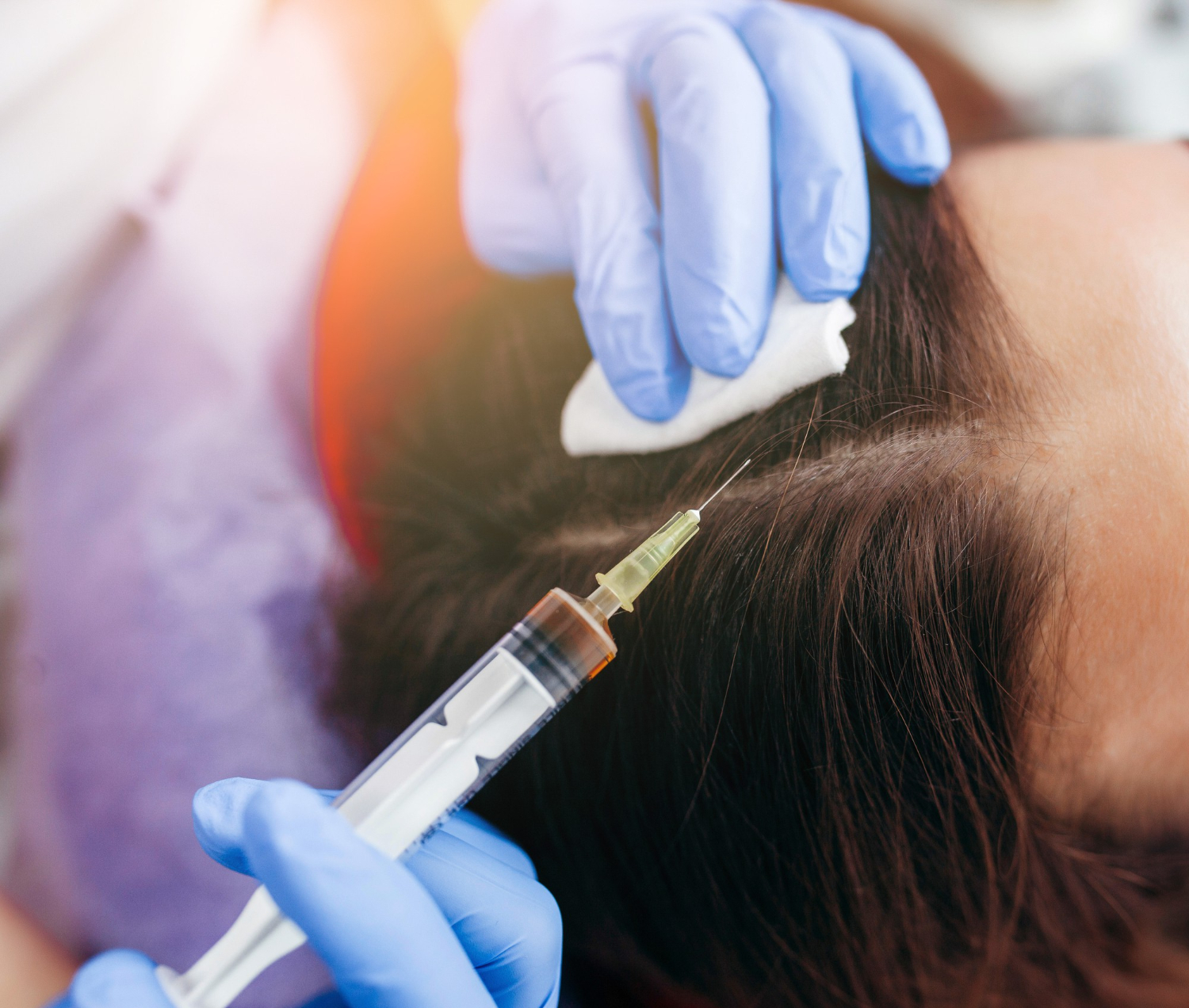
The doctor uses a fine needle to inject small volumes of PRP into the thinning areas of the scalp, spacing the injections several millimeters apart. The target area typically includes zones of active hair loss and early recession. It usually takes 15 to 20 minutes to complete the PRP injections for hair Dubai. Each injection site may appear slightly elevated or pink after the treatment, but these symptoms usually go away in a few hours.
PRP Hair Treatment Aftercare, Recovery, And Activity Restrictions
After PRP treatment for hair, recovery is typically rapid. Despite frequently delaying intense exercise for 24 hours, most patients resume their regular daily activities the same day.
During recovery after PRP hair therapy for a day or two, injection sites may experience mild swelling, soreness, or redness. A transient dull headache or a feeling of stiffness in the scalp is reported by some people. To preserve the health of the scalp on the day of treatment, it is advised to stay away from hot showers, saunas, and harsh hair products. Additionally, patients are instructed not to rub or scratch the sensitive area.
Instructions for post-treatment maintenance can include postponing chemical treatments or hair coloring for a few days and gently cleaning the next day. While the scalp heals, these steps help reduce irritation. The majority of patients can go back to work right away, particularly if their jobs don’t require a lot of physical exertion. PRP hair treatment is unobtrusive because any obvious symptoms often go away soon.
PRP Hair Treatment Plans, Results, And How Long They Last
To support long-term hair loss prevention and increased hair development, PRP hair treatment works best as a series of treatments followed by maintenance.
Typical Number And Frequency Of PRP Sessions
The majority of procedures call for a first round of three sessions spaced roughly four weeks apart. Depending on how severe the hair thinning is, some clinics may recommend three or four treatments. To awaken dormant hair follicles and regulate ongoing hair loss, these early treatments create a foundation of growth factors surrounding the hair follicles. Every session builds upon the one before it.
Visits for booster or maintenance sessions are introduced following the first three treatments. Depending on the patient’s response, maintenance sessions may be planned every six to twelve months. The exact approach may vary because not every patient needs therapy at the same intensity or duration. The clinician can modify frequency and determine when three more sessions could be beneficial through ongoing evaluation.
Timeline For Visible PRP Hair Treatment Results
Injections of platelet-rich plasma produce slow results. After the first session, the majority of patients do not see significant changes, which is typical for this type of therapy. Some people report decreased shedding over the first one to two months, indicating that hair loss prevention is beginning. Improved hair growth and thicker strands frequently become more noticeable around three to six months.
Since daily changes in hair density can be slight, photos taken before and after treatment are highly beneficial. Many patients have a fuller part line or greater hair coverage at the crown. After beginning PRP hair treatment, the maximum benefit from the first series may manifest six to twelve months later. It is important to maintain reasonable expectations, particularly in cases of long-term androgenetic alopecia.
PRP Hair Treatment Maintenance Sessions And Durability of Results
The benefits of PRP for hair loss gradually diminish if the underlying problem persists in the absence of maintenance treatments. One or two booster sessions a year can help many people maintain scalp health and hair density. Depending on how rapidly thinning hair returns, the timetable can be modified.
Individual reactions vary, but results can last up to two years or longer with regular maintenance. When suitable, combining PRP therapy with other medical hair loss treatments, such as minoxidil or finasteride, may improve durability and enhance overall hair restoration results. Patients need to understand that PRP cannot cure androgenetic alopecia or male pattern baldness. Rather, it functions as a continuous treatment that promotes healthier hair and stops the deterioration.
Benefits, Risks, And Side Effects Of PRP Hair Treatment
Before beginning therapy, patients should be aware of the potential dangers and side effects associated with PRP hair treatment, just like with any medical procedure.
Key Benefits Compared With Other Hair Loss Treatments
Using the patient’s own blood lowers the risk of an allergic reaction, which is one of the main benefits of platelet-rich plasma therapy. Growth factors and concentrated platelets are the only foreign substances present. Since PRP is a non-surgical procedure, it doesn’t require stitches, incisions, or lengthy recovery periods like hair transplant surgery does. Following scalp injections, the majority of patients return to their regular activities nearly immediately.
The treatment immediately addresses follicle function and scalp health. It seeks to promote hair development in areas where follicles already exist but are underperforming, as opposed to moving hair, as transplants do. Under a doctor’s supervision, PRP can be used in conjunction with other hair loss treatments in a medical office setting. For appropriate patients, it offers a cutting-edge therapy strategy that leverages natural biology.
Common Temporary Side Effects Of PRP Hair Treatment
Following PRP therapy, common side effects are often modest and transient. For a day or two, patients frequently experience warmth, swelling, or pain at the injection site. Multiple injections across the scalp may cause minor bruises, particularly in individuals who are prone to bruising. It’s also possible to have transient redness or a sunburn-like feeling.
Some people get momentary lightheadedness or dizziness just after the procedure; this is frequently caused by worry, the blood draw, or local anesthesia. With rest, these symptoms usually go away soon. According to the expert’s advice, over-the-counter painkillers that don’t affect platelets might be suggested for comfort. The majority of patients say that any discomfort following PRP hair treatment is tolerable.
Less Common Risks And Safety Considerations
Infection, scarring, or tiny nodules developing beneath the skin at injection sites are less frequent complications. Experienced caregivers and strict sterile technique significantly lessen these problems. In rare instances, poor injection technique close to specific facial vessels has been connected to major side effects, such as altered vision. This is one of the reasons picking a qualified medical practitioner is important.
A review of the patient’s allergy history is necessary since local anesthetics can cause allergic responses. PRP for hair loss in patients with active scalp infections should be delayed until the infection resolves. Overall, PRP platelet-rich plasma therapies have a positive safety profile when administered in a regulated medical context. Potential dangers should always be discussed in detail before therapy starts.
Conclusion And Summary Of PRP Hair Treatment And Restoration For Natural Results
For many individuals with early androgenetic alopecia and thinning hair, PRP hair therapy and restoration present a viable, minimally invasive option. This treatment provides concentrated growth factors directly to susceptible hair follicles by utilizing platelet-rich plasma from the patient’s own blood.
After three sessions and upkeep, the majority of patients who are good candidates should anticipate incremental improvements in hair density, texture, and scalp health. While PRP does not cure hair loss and some patients do not respond, it has become an increasingly popular choice in modern hair restoration.
Anyone thinking about using PRP to treat hair loss should speak with a licensed healthcare provider, weigh the advantages and disadvantages, and create a customized treatment plan. With reasonable expectations and sufficient follow-up, PRP therapy can be a valuable tool in long-term hair loss prevention and maintenance.
For both men and women, Hortman Clinics which is one of the best PRP hair clinic in Dubai, offers cutting-edge surgical and non-surgical hair loss treatments.
We provide complete hair restoration and transplant solutions if you have bald areas, a receding hairline, or persistent pattern baldness. Our highly qualified staff prioritizes realistic results and individualized treatment planning from your initial consultation through long-term hair management.
We emphasize producing refined, natural results, setting a new benchmark for perfection. Make an appointment for a hair restoration consultation in Dubai at Hortman Clinics by calling us.
FAQs
What is PRP hair treatment and how does it help with hair loss?
To treat thinning areas of the scalp, platelet-rich plasma from your own blood is condensed in a centrifuge and injected. PRP’s growth factors activate dormant hair follicles, enhance blood flow, thicken hair shafts, and delay hair loss while encouraging progressive regrowth in many patients.
Who is a good candidate for PRP hair restoration?
Men and women with early to moderate thinning who still have fine or miniaturized hairs are the greatest candidates for PRP hair restoration. Ideal candidates have normal platelet counts, are generally in excellent health, and seek a non-surgical solution or a method to improve the outcomes of hair transplants. PRP alone is ineffective for advanced, glossy bald patches.
How many PRP hair treatment sessions do I need and when will I see results?
The majority of treatment regimens begin with three PRP sessions spaced four weeks apart, followed by maintenance once or twice a year. Within one to two months, many report less shedding, and between three and six months, there is noticeable thickening or improved coverage; the best improvement is typically observed between six and twelve months.
What are the side effects and downtime after PRP for hair loss?
After PRP for hair loss, there is usually very little downtime. For a day or two, patients frequently experience modest scalp discomfort, swelling, redness, or minor bruising. When a skilled medical practitioner performs the procedure, serious problems are uncommon, and most patients can expect a smooth recovery with minimal complications. The majority of people resume their regular activities the following day, abstaining from hot showers and strenuous activity for a full day.
What makes PRP hair treatment a popular option for hair restoration?
PRP hair treatment uses platelet-rich plasma derived from the patient’s own blood to deliver growth factors directly to the scalp. This helps stimulate weak hair follicles, improve scalp circulation, and support thicker, healthier hair growth over time.
Is PRP hair restoration available at Hortman Clinics in Dubai?
Yes, PRP hair restoration at Hortman Clinics in Dubai is offered as a non-surgical treatment for individuals experiencing thinning hair. Specialists assess scalp health and create a personalised PRP treatment plan designed to encourage natural hair regrowth.
How long does a typical PRP hair treatment appointment take?
Most PRP hair restoration sessions take about 45–60 minutes. The visit usually includes drawing a small blood sample, processing it in a centrifuge to concentrate platelets, and injecting the prepared PRP into targeted areas of the scalp.
Can PRP hair therapy help with male and female pattern hair loss?
PRP therapy is commonly used to manage androgenetic alopecia, also known as male or female pattern hair thinning. The growth factors in PRP may help strengthen miniaturized follicles and support thicker hair strands.
What results can patients expect after PRP hair restoration treatments?
First, many patients notice reduced hair shedding within the first two months, followed by gradual improvements in hair thickness and density after three to six months. Results continue to develop as hair follicles respond to the growth factors.