



Medically reviewed by:Dr. Karem Harb
Acne scars can persist even after your active breakouts have healed. They often leave depressions in the skin, uneven texture, and changes in skin appearance, making one exceptionally conscious of them.
Of the many available treatments, TCA CROSS and microneedling are two procedures that are often used to improve selected depressed acne scars, but they work differently.
This guide explains how each procedure works, which scar types it may help, and what patients should consider before treatment.
Table of Contents
Types of Acne Scars and How They Form
Acne can leave different types of marks and scars as it heals. Identifying the type is important because treatments that improve depressed scars may not be appropriate for raised scars or pigmentation.
1. Atrophic Scars
Atrophic scars are depressed scars that develop when insufficient collagen is produced during healing. They are of three types:
Boxcar scars: Broad depressions with sharply defined edges.
Rolling scars: Shallow, sloping depressions that create an uneven skin surface.
Ice-pick scars: Narrow, deep pits that extend into the skin. These scars can be challenging to treat because they are narrow and deep.
2. Hypertrophic and Keloid Scars
These raised scars form due to excess scar tissue. Hypertrophic scars remain within the boundaries of the original injury, whereas keloids extend beyond those boundaries.
Treatments for depressed acne scars are not necessarily appropriate for raised scars, which require a different clinical assessment.
3. Post-Inflammatory Hyperpigmentation (PIH)
PIH consists of flat brown, grey, or darker marks that remain after acne-related inflammation. Unlike atrophic or raised scars, PIH does not involve a depression or an excess of scar tissue.
PIH often fades over time, although targeted treatment may help. A dermatologist can distinguish pigmentation from structural scarring and recommend an appropriate approach.
What is a TCA CROSS Procedure?
Trichloroacetic Acid Chemical Reconstruction of Skin Scars, or TCA CROSS, is a targeted cosmetic procedure.
It uses high-concentration trichloroacetic acid (TCA) to treat individual depressed acne scars.
TCA CROSS is commonly used for deep ice-pick scars and selected narrow boxcar scars.
A TCA CROSS procedure should always be performed by a trained and experienced medical professional.
This is because concentrated acid can damage the surrounding skin if it is applied incorrectly.
How does TCA CROSS improve acne scars?
- Concentrated TCA is carefully applied to selected scars using an appropriate applicator.
- The controlled chemical injury produces a whitish appearance known as frosting and initiates a wound-healing response.
- Subsequent collagen remodeling may make the treated depressions shallower and less noticeable.
- The procedure targets individual scars rather than treating the entire face.
Following treatment, the affected areas typically develop temporary redness, frosting, and small scabs.
Healing and collagen remodeling take time, and multiple sessions may be necessary.
What is Microneedling?
This is a minimally invasive cosmetic procedure in which a dermatologist or cosmetic expert uses very fine needles to create controlled micro-injuries in the skin.
Microneedling creates controlled punctures that trigger a wound-healing response.
As collagen remodels over time, some depressed scars and areas of uneven texture may become less noticeable. Results vary, and deep ice-pick scars often need a more targeted treatment.
Unlike TCA CROSS, which treats individual scars, microneedling addresses a broader area of the face.
The American Academy of Dermatology (AAD) describes microneedling as an option for selected acne scars.
During professional microneedling, a practitioner uses a sterile device to create controlled micro-injuries at an appropriate depth, stimulating collagen remodeling as the skin heals.
TCA CROSS vs Microneedling: How are They Different?
Here is a practical comparison between the two treatments:
| Feature | TCA CROSS | Microneedling |
|---|---|---|
| How it works? | A concentrated TCA solution is applied to individual scars. | Involves the creation of controlled needle punctures across a larger target area |
| Best suited for | ● Deep ice-pick scars ● Selected narrow boxcar scars | ● Rolling scars ● Shallow boxcar scars ● Uneven texture |
| Skin type | Can be used in different skin types, but darker skin tones may have a higher risk of pigmentation changes and require careful assessment. | Suitable for many skin types, including darker skin tones, when performed with appropriate settings and professional assessment. |
| Treatment area | Individual scars | Broader areas of the skin |
| Mechanism of action | Chemical injury followed by collagen remodeling | Mechanical micro-injuries that stimulate collagen |
| Expected improvement | May make selected deep scars shallower | May make selected scars and textural irregularities less noticeable |
| Recovery involves | Localized scab formation and redness | Temporary redness, swelling, and sensitivity |
| Limitation | Does not address broad textural irregularities uniformly | May be insufficient for deep, narrow ice-pick scars on its own |
| Risks | ● Pigmentation changes ● Burns ● Additional scarring | ● Infection ● Irritation ● Pigmentation changes ● Further scarring |
| Cost per session | Starts at AED 1200 | Starts at AED 1500 |
Price Disclaimer: Prices may vary depending on the treatment plan, area treated, and current packages or promotions. Please contact us for the latest price.
Which Treatment Works Better for Different Scar Types?
Treatment choice depends on the scar type and its characteristics. A dermatologist often considers scar type first when choosing between these procedures.
-
For deep, pitted acne scars:
TCA CROSS is commonly considered for narrow ice-pick scars because it is effective at greater depths of the skin, and microneedling alone may not be sufficient to treat these scars.
-
For rolling acne scars:
Microneedling can improve the overall texture of affected areas. However, scars tethered to deeper tissue may require subcision or a combination approach.
-
For shallow boxcar scars and uneven texture:
Microneedling is helpful in improving the appearance of scars and the texture of the skin over a larger area. Deeper boxcar scars may need other resurfacing or scar-revision techniques.
-
For mixed acne scars:
When acne scars have different shapes or depths, a dermatologist may recommend more than one treatment. The treatment plan depends on the individual assessment.
Acne Scar Treatment Options Available at Hortman Clinics, Dubai
Other options for acne scars at Hortman Clinics in Dubai may include laser resurfacing, radiofrequency microneedling, and chemical peels, depending on clinical suitability and the services offered.
1. Laser Treatment
Laser treatment using advanced devices like HALO, UltraClear, Fotona SP Dynamis, and StarWalker can effectively improve the appearance of scars.
Recovery and pigmentation risks vary depending on the laser device, treatment settings, and individual skin type.
2. Morpheus8
Morpheus8 combines microneedling with radiofrequency energy and may be considered for selected acne scars and textural irregularities.
In selected cases, it may be combined with a fractional laser procedure as part of a personalised treatment plan.
3. Chemical Peels
Chemical peels use solutions such as glycolic acid or salicylic acid to help improve superficial skin texture and post-acne pigmentation.
However, chemical peels are generally not effective for correcting established deep acne scars.
4. Microdermabrasion
Microdermabrasion exfoliates the outermost layer of the skin and may help improve overall skin tone and superficial texture.
However, it does not correct established depressed acne scars.
Explore Hortman Clinics' post-acne scar treatment options and laser scar removal treatments.
Which Treatment Is Better?
Neither procedure is best for every acne scar. A dermatologist can assess the scar type and discuss whether one treatment or a combination is appropriate.
At a consultation with a dermatologist at Hortman Clinics in Dubai, your scars can be assessed by type, depth, and distribution.
The dermatologist can then discuss suitable treatment options, expected improvement, potential risks, and recovery time.
FAQs
Frequently asked questions
TCA CROSS is commonly considered for deep ice-pick scars and selected narrow boxcar scars, while microneedling may improve broader areas of textural irregularity.
The best treatment of acne scars varies for every individual as it depends on the type of scar, skin type, and tone. TCA CROSS, microneedling, laser resurfacing, and radiofrequency microneedling are the most commonly used treatments, each used for a different concern.
TCA CROSS may be appropriate for selected patients with darker skin tones, but post-inflammatory hyperpigmentation, hypopigmentation, and other complications are possible. An experienced, trained dermatologist should assess your risk factors and determine whether the procedure is right for you.
Microneedling can make scars less noticeable by improving collagen production and skin texture. However, it cannot guarantee complete scar removal.
The number of sessions needed to improve scar appearance depends on the scar type, severity, treatment protocol, and your individual response. Your dermatologist should discuss the likely treatment course and reassessment schedule before treatment begins.
Active acne may need to be controlled before certain scar procedures. A dermatologist can assess your acne, identify suitable treatment timing, and recommend a plan for both concerns.
Medical Review & Clinical Accuracy
Written by: Hortman Clinics Editorial Team
Medically reviewed by:Dr. Karem Harb
Hortman Clinics periodically reviews and updates its health information as medical evidence, technologies, and clinical recommendations evolve.
Last medically reviewed : October 21, 2026
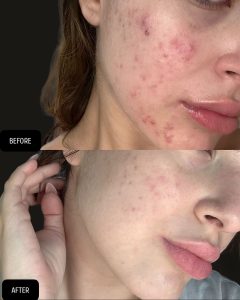
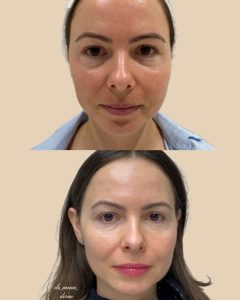
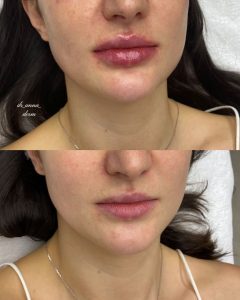
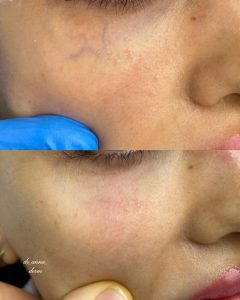
Before and After
Explore real before-and-after results from patients treated at Hortman Clinics. Results vary between patients and may depend on factors including anatomy, skin type, age, medical history, treatment parameters, and individual response. All published patient images are used with appropriate patient consent.


Consult with us.
Everything we do is tailored to your needs, this is why we take our time to take care of you and answer all your questions.