



Peptide therapy for joint recovery uses short chains of amino acids to help in the recovery of connective tissues like tendons, ligaments, and muscles. This treatment is particularly useful for people who are recovering from sports injuries, overuse injuries, surgery, dealing with degenerative changes in the joints, or who want to improve recovery after physical activity.
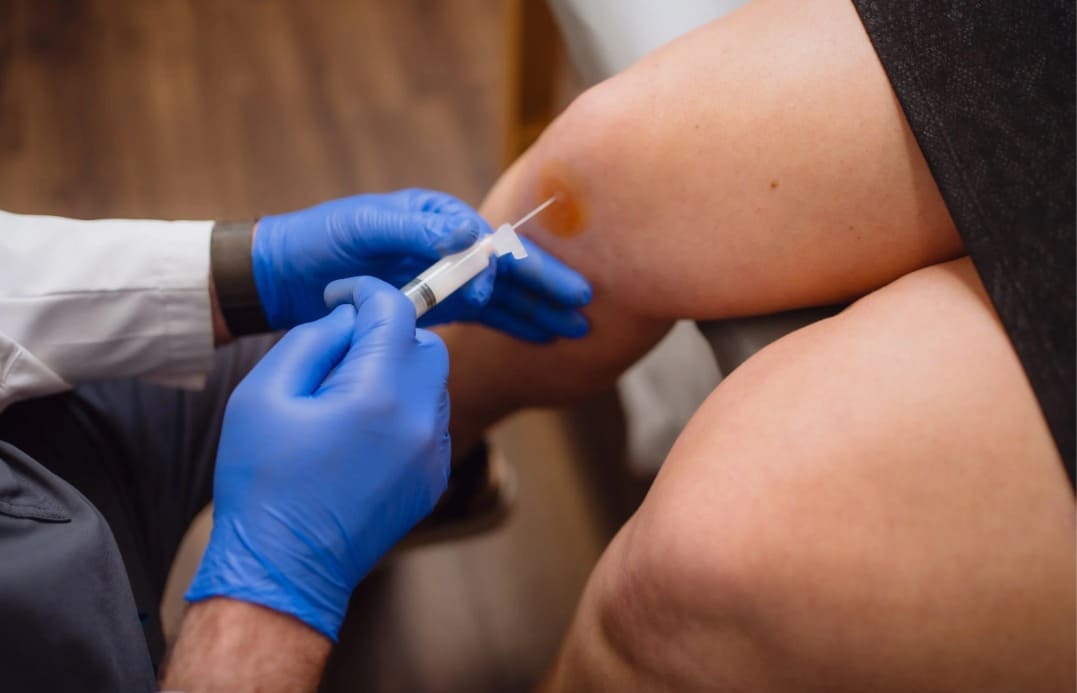
What are Peptides: The Biological Signaling Molecules?
Peptide therapy is a new-age therapy that uses peptides (short chains of amino acids) to modify or restore the body’s natural biological pathways and help in tissue recovery. Peptides are naturally found in the body and are involved in tissue function, signaling, and repair.
In the context of joint recovery, researchers are studying the potential effects of peptides on tissues such as tendons, ligaments, muscles and connective tissue. This is of particular interest to sports persons, athletes, people with aging joint changes, and those who wish to improve their recovery after workouts,
It is important to note that several peptides discussed for joint recovery remain investigational, and existing evidence from laboratory or animal studies does not automatically mean that they are beneficial for all people. A medically supervised approach is therefore very important.
How Do Peptides Help in Recovery?
As discussed earlier, peptides are present throughout the body and influence communication between cells and different biological processes. Based on their structure and receptor interactions, peptides can affect pathways that are associated with inflammation, blood-vessel formation, cell migration, collagen production, and tissue remodeling.
Therapeutic peptides are designed or chosen because of their property of influencing these biological pathways. Current evidence shows that peptides are able to influence tissue regeneration, cell migration, and affect inflammatory signaling pathways. The primary goal of peptides in recovery is not just to suppress symptoms but to assist the body’s biological environment to bring about recovery.
This distinction is important because pain relief does not necessarily mean tissue healing.
Which Peptides Are Associated with Joint Recovery?
Hortman Clinics is one of Dubai’s leading aesthetic, regenerative medicine and longevity clinics, offering advanced, medically supervised treatments such as peptide therapy to support recovery, joint health and overall well-being. Our doctors develop personalised peptide therapy programmes using carefully selected, high-quality products based on each patient’s health needs, medical history and treatment goals.
Let’s explore the different peptides that are associated with joint recovery. Some of these peptides are still being studied for their potential benefits for joint health.
BPC-157 is an experimental peptide that has gained immense attention due to its potential in bringing about musculoskeletal recovery.
Another peptide that is gathering attention is TB-4 (synthetic thymosin beta-4). It is being investigated for biological processes involved in wound healing, cell migration, and tissue repair.
While both these peptides have shown immense benefits for joint recovery, they are still being studied.
Experimental studies suggest that BPC-157 and thymosin beta-4-related pathways may affect processes such as cell migration, formation of new blood vessels (angiogenesis), and modulating inflammatory processes, all of which are linked to tissue repair.
GHK-Cu is a copper-binding peptide that has been studied in relation to skin and connective-tissue biology. Existing research shows the possible influence of this peptide on extracellular-matrix processes and signaling associated with tissue maintenance.
Its effect on collagen and tissue biology has led to an increased interest in its potential applications. Studies have shown that GHK-Cu peptide can stimulate collagen production and tissue remodeling.
However, there is no proof yet that the GHK-Cu peptide can help regenerate damaged cartilage or restore a joint to its pre-injury condition.
Can Peptide Therapy Support Joint Mobility?
Peptide therapy cannot always guarantee joint mobility support.
This is because improvements in joint mobility depend on several factors, such as the original injury, strength, flexibility, neurological control, and adherence to rehabilitation measures.
Many individuals opt for peptide therapy if they are experiencing persistent joint stiffness, which makes exercise or rehabilitation difficult.
Tendons, ligaments, muscles and surrounding connective tissues can all contribute to stiffness and restricted movement. If a peptide influences inflammatory signaling or tissue-repair pathways, it could theoretically contribute to a recovery environment that supports rehabilitation.
However, this is not always the case.
Can Peptides Help with Joint Inflammation?
While peptides can reduce joint inflammation, their anti-inflammatory effect alone is not sufficient to repair damaged tissue in the area.
Inflammation is a complex biological response and a normal part of tissue healing. However, when persistent, chronic inflammation can damage tissues as seen in conditions like osteoarthritis or significant structural injury.
Peptides have been found to reduce inflammation in the joints, enabling tissues in the area to recover, restoring joint health and function.
Is Peptide Therapy Safe for Joint Concerns?
The safety of peptide therapy for joint conditions depends on the type of peptide administered, route of administration, quality of the product, and the patient’s health. When trained, qualified professionals administer peptide therapy, it is generally safe and rarely causes complications.
However, some people may experience side effects, such as injection-site reactions and other effects related to the particular compound. Since the safety data of many peptides and their benefits for joint recovery are still under study, the knowledge about their long-term risks is not fully understood.
If you are considering peptide therapy for joint recovery, you must provide your doctor with a complete list of medications and information about your health conditions.
Who May Be a Candidate for Joint-Recovery Peptides?
Peptide therapy for joint recovery is not for everyone. Your doctor will consider several factors during your consultation appointment before determining your suitability for this therapy. This includes evaluating
- The location, duration and severity of joint symptoms
- History of previous injuries, surgeries or sports-related problems
- Current physical activity and rehabilitation history
- Existing medical conditions
- Current medicines and supplements
- Previous treatments and their results
- Functional limitations, including difficulty walking, exercising or performing everyday activities.
At Hortman Clinics, the purpose of a comprehensive and personalized consultation is to determine the likely cause of the symptoms before considering any peptide-based intervention.
Your doctor may request additional investigations like blood or imaging tests when needed.
What to Expect During Your Peptide Consultation at Hortman Clinics, Dubai?
Your consultation at Hortman Clinics, Dubai begins with a detailed discussion of symptoms, previous injuries, and treatment history. The doctor may ask about activity levels, exercise routines, medications, supplements, and relevant medical conditions.
They may perform a physical assessment to identify limitations in mobility, tenderness, strength or function. Existing imaging and other medical reports may be reviewed to determine if peptide therapy is helpful.
If peptide therapy is recommended for you, the healthcare expert will run you through the procedure, recovery, what results to expect, and aftercare tips.
How Is Peptide Therapy Administered?
Administration of peptide therapy depends on the peptide chosen and treatment protocol. The dose and frequency of your peptide therapy are determined by a qualified clinician rather than copied from online protocols.
Avoid self-administering peptides or getting products from unverified sources, as these can be life-threatening.
Monitoring Your Response and Adjusting the Plan
At Hortman Clinics, our clinicians perform regular follow-ups to evaluate symptoms, improvement in joint mobility, assess functional progress, and identify potential adverse effects. If the expected response is not occurring, your doctor may reconsider the treatment plan.
Monitoring can also help determine whether rehabilitation or another intervention should be intensified.
At Hortman clinics, we follow a structured approach to make it easier to distinguish genuine functional improvement from temporary changes in pain perception.
How Much Does Peptide Therapy for Joint Recovery Cost in Dubai?
The cost of peptide therapy for joint recovery in Dubai varies depending on several factors, such as the type of peptide, its formulation, the number of sessions you require, the source of the product, and the duration of treatment.
The cost of peptide therapy in Dubai can vary significantly because there is no single standard program for every patient. Treatment costs may also increase if laboratory or imaging tests are required.
Book a Joint-Recovery Consultation at Hortman Clinics, Dubai
Joint recovery is a process, not a single treatment. Peptide therapy is an upcoming treatment for conditions affecting joint health, but most peptides today are still being studied for their potential benefits.
A personalized medical assessment can help determine if peptide therapy is helpful to relieve your symptoms and help heal and restore your joint function.
Peptide therapy may be an area of ongoing scientific interest, but many commonly promoted peptides still require stronger human evidence before their benefits and risks can be established with confidence.
If you have persistent joint pain, stiffness, or an old injury that is affecting your mobility, book a clinical assessment with our top experts at Hormtan Clinics, Dubai and Jumeirah, today.
Book Now
HORTMAN CLINICS NEWS
Related News

We are here for you. Always.
Everything we do is tailored to your needs, this is why we take our time to take care of you and answer all your questions.