


best aesthetic clinics in Dubai
Written by: Hortman Clinics Editorial Team
Medically reviewed by:Dr. Karem Harb
Last medically reviewed : November 6, 2026
Permanent eyebrow tattoos are used to enhance the shape, colour, and definition of the eyebrows. They may also be described as permanent makeup (PMU), cosmetic eyebrow tattooing, micropigmentation, powder brows, ombré brows, or microblading, depending on the technique used.
Although these treatments are intended to provide long-lasting results, eyebrow pigment can change over time. It may fade unevenly, shift in colour, become less defined, or no longer suit your preferred eyebrow shape.
If you are considering permanent eyebrow tattoo removal, permanent makeup (PMU) removal, or cosmetic eyebrow tattoo removal, laser treatment may help gradually lighten unwanted pigment.
At Hortman Clinics, Dubai, PicoWay® is one of the laser technologies used for selected tattoo-removal cases. However, not every cosmetic eyebrow pigment responds in the same way, and complete removal cannot be guaranteed.
Your suitability for treatment depends on several factors, including the pigment colour and composition, depth of the tattoo, skin type, previous treatments, medical history, and the condition of the skin around the eyebrows.
A clinical assessment with our DHA-licensed dermatologists or trained medical laser professional is therefore an important first step.
In this guide, we explain how PicoWay® works for permanent eyebrow tattoo and PMU removal, how many sessions may be required, what happens during treatment, possible side effects, aftercare, and what you can realistically expect.
Table of Contents
What Is PicoWay® and How Does It Work for Permanent Eyebrow Tattoo Removal?

PicoWay® is a picosecond laser system. It delivers very short pulses of laser energy measured in picoseconds, or trillionths of a second.
For tattoo removal, the aim is to selectively target pigment while limiting unnecessary exposure to the surrounding skin.
Different tattoo pigments respond differently to different wavelengths, which is why permanent makeup removal should not be approached as a one-size-fits-all procedure.
In general, PicoWay® tattoo removal involves three stages.
Before treatment, the clinician evaluates the colour, depth, density, and distribution of the eyebrow pigment, as well as your skin type.
The treatment settings and wavelength are then selected according to the pigment being treated and your individual skin characteristics.
Different colours absorb laser energy differently, and some cosmetic pigments are more complex than standard tattoo inks.
This is particularly relevant with permanent makeup because PMU pigments may contain mixtures of colours rather than a single pigment.
When the tattoo pigment absorbs the laser energy, it can fragment into smaller particles.
Immediately after treatment, the area may temporarily appear white or “frosted.” This is an early laser response and should not be interpreted as complete pigment removal.
Visible fading happens gradually rather than immediately.
Following treatment, the body’s immune and tissue-clearance processes gradually remove some of the fragmented pigment.
This process takes time.
For this reason, permanent eyebrow tattoo removal usually requires more than one treatment session, with sufficient time between sessions for the skin to recover and for the clinician to assess the response.
Can PicoWay® Remove Permanent Makeup and Cosmetic Eyebrow Tattoos?
PicoWay® may be used to lighten or remove selected permanent eyebrow tattoos and cosmetic eyebrow pigments.
This may include:
- Permanent eyebrow tattoos
- Permanent makeup (PMU)
- Cosmetic eyebrow tattooing
- Eyebrow micropigmentation
- Powder brows
- Ombré brows
- Some microblading pigments
- Combination brows
However, the response to treatment varies significantly.
Cosmetic tattoo pigments may contain different colour mixtures, iron oxides, titanium dioxide, or other compounds. Certain pigments can behave unpredictably when exposed to laser energy.
For example, some light, red, pink, white, beige, or flesh-toned pigments may darken after laser exposure rather than immediately becoming lighter.
This is one reason why an assessment—and in some cases a test spot—may be recommended before treating the entire eyebrow area.
What Happens During PicoWay® Permanent Eyebrow Tattoo Removal?
Knowing what happens before, during, and after treatment can help you understand what to expect from permanent makeup removal.
Before PicoWay® eyebrow tattoo removal, your clinician will usually assess several factors.
These may include:
- Your medical history
- Current medications
- Skin type
- Previous laser treatments
- Previous cosmetic procedures
- History of abnormal scarring
- Previous reactions to tattoo pigment
- The age of the tattoo
- Pigment colour and density
- Condition of the skin around the eyebrows
The eyebrow area is also examined to assess how deeply and evenly the pigment appears to have been placed.
Because permanent eyebrow tattoo removal is performed close to the eyes, careful treatment planning and appropriate eye protection are particularly important.
Clinical photographs may also be taken before treatment so that progress can be compared over time.
For certain cosmetic tattoo pigments, particularly where the pigment composition is unknown, the clinician may recommend a test spot before treating the complete area.
Before treatment begins, the eyebrow area is cleaned.
Appropriate wavelength-specific protective eyewear is used by the patient and the treatment team.
The clinician then delivers carefully selected laser pulses to the tattooed areas.
The actual laser application may take only a few minutes depending on the size, colour, density, and complexity of the eyebrow tattoo.
Patients commonly describe the sensation as a series of quick snaps against the skin.
Discomfort varies from person to person and also depends on the treatment settings used.
Following laser treatment, you may notice:
- Redness
- Mild swelling
- Temporary whitening or frosting
- Tenderness
- Pinpoint bleeding
- Mild crusting
- Temporary colour changes
These effects do not indicate the final result.
The pigment continues to change and fade over the following weeks as the skin heals and fragmented pigment is gradually cleared.
How Many Sessions Are Needed for Permanent Eyebrow Tattoo Removal?
There is no fixed number of sessions that applies to every patient.
The number of PicoWay® sessions required for permanent eyebrow tattoo or PMU removal depends on several factors.
Black and darker pigments may respond differently from red, yellow, orange, white, beige, or flesh-coloured pigments.
Permanent makeup can be particularly complex because cosmetic pigments are often made from a combination of colours.
As darker components fade, previously hidden red, orange, yellow, or other tones can sometimes become more visible.
Pigment placed deeper in the skin may respond differently from more superficial cosmetic pigment.
The depth may also vary within the same eyebrow tattoo.
Heavily saturated or repeatedly retouched eyebrows may require more treatment than lightly pigmented areas.
Older eyebrow tattoos may already have faded to some degree.
However, an older tattoo is not automatically easier to remove. Pigment composition and depth are often more important than age alone.
Skin tone is an important consideration when planning laser treatment.
The clinician must balance effective pigment targeting with the risk of unwanted skin pigment changes, including post-inflammatory hyperpigmentation or hypopigmentation.
Previous laser sessions, chemical removal attempts, saline removal, or other procedures can change the appearance of the pigment and surrounding skin.
Your clinician should take these treatments into account when developing a new treatment plan.
How Long Should You Wait Between PicoWay® Sessions?
Permanent eyebrow tattoo removal should be gradual.
Treatment sessions are commonly spaced approximately six to eight weeks apart or longer, depending on the individual response.
The interval may be extended if:
- The skin is still healing
- There is persistent redness
- Pigment changes occur
- The clinician wants to monitor the response before additional treatment
- There has been significant crusting or irritation
Treating the area again before it has adequately healed may unnecessarily increase the risk of complications.
Your treatment schedule should therefore be based on clinical assessment rather than a predetermined number of sessions.
What Results Can You Expect?
The goal of laser eyebrow tattoo removal is generally progressive lightening of unwanted pigment.
Some people may achieve substantial clearance, while others may retain visible residual pigment.
Results depend on:
- Pigment formulation
- Pigment colour
- Depth
- Density
- Number of previous tattoo sessions
- Skin type
- Laser settings
- Healing response
- Previous removal attempts
It is important to have realistic expectations.
No responsible practitioner should guarantee complete permanent makeup removal because certain pigments may be resistant to treatment or may change colour during the removal process.
When to choose dental veneers?
Cosmetic dentists opt for dental veneers in the following cases:
- When there are minor cosmetic concerns, such as chipping of teeth, discolouration, and mild misalignment.
- In smile makeovers for aesthetic improvement.
- In teeth with a healthy underlying structure and minimal damage.
Veneers are favoured when a natural look and minimal tooth alteration are desired.
Can Permanent Eyebrow Tattoo Pigment Change Colour After Laser Treatment?
Yes.
This is an important consideration with PMU removal.
Some cosmetic tattoo pigments can become darker when exposed to laser energy. This is sometimes referred to as paradoxical darkening.
Pigments containing substances such as iron oxides or titanium dioxide may be particularly relevant.
In other cases, removing one colour component can reveal another underlying pigment.
For example, a brown eyebrow tattoo may contain several colours. As the darker pigment fades, red, orange, yellow, or other tones may become more noticeable.
Because the exact composition of older cosmetic tattoos is often unknown, a clinician may recommend a test spot before full treatment.
Recovery After PicoWay® Eyebrow Tattoo Removal
Recovery varies according to treatment intensity, skin type, pigment response, and individual healing.
What can be normal after treatment?
You may experience:
- Mild redness
- Swelling
- Tenderness
- Temporary whitening
- Pinpoint bleeding
- Superficial crusting
- Temporary darkening or lightening of the treated area
These effects generally improve as the skin heals.
Tattoo fading continues for longer than the initial recovery period because pigment clearance is gradual.
Aftercare Following Permanent Makeup Removal
Your clinician should provide personalised aftercare instructions following treatment. General recommendations may include:
- Keep the area clean and avoid unnecessary rubbing.
- Do not scratch, pick, or remove crusts.
- Avoid applying irritating skincare products near the treated eyebrows while the area is healing.
- Avoid retinoids, exfoliating acids, and other potentially irritating active ingredients until your clinician advises that they can be restarted.
- Protect the area from excessive sun exposure.
- Once the skin has healed sufficiently, use suitable broad-spectrum sun protection on exposed surrounding skin.
- Avoid applying eyebrow makeup or other cosmetic products to the treated skin until your clinician advises that it is safe.
Contact us if you develop worsening pain, spreading redness, increasing swelling, pus, fever, significant blistering, or other symptoms that concern you.
Who May Be Suitable for PicoWay® Eyebrow Tattoo Removal?
You may consider permanent eyebrow tattoo removal if:
- You no longer like the eyebrow shape
- The colour has changed
- The tattoo has faded unevenly
- The pigment has become too dark
- You want to remove old PMU before considering a different eyebrow style
- Previous microblading or powder brows no longer suit your preference
- You want to lighten existing cosmetic eyebrow pigment
However, wanting the pigment removed does not automatically mean laser treatment is appropriate.
Suitability depends on the individual tattoo and your skin.
A dermatologist or appropriately trained medical laser practitioner should evaluate:
- Pigment colour and composition
- Skin type
- Skin condition
- Previous treatment history
- Tendency to develop pigmentation changes
- History of abnormal scarring
- Current medications
- Medical conditions
- Recent cosmetic procedures
Treatment may need to be postponed if the eyebrow area is infected, inflamed, irritated, sunburned, or not fully healed from another procedure.
What Are the Possible Risks and Side Effects?
PicoWay® is used for tattoo-removal applications, but laser tattoo removal is still a medical procedure with potential risks.
Possible side effects may include:
- Redness
- Swelling
- Temporary discomfort
- Blistering
- Crusting
- Burns
- Infection
- Hyperpigmentation
- Hypopigmentation
- Scarring
- Incomplete pigment removal
- Unexpected pigment colour changes
- Paradoxical darkening
The likelihood of these complications depends on factors such as skin type, pigment formulation, treatment settings, healing response, and practitioner experience.
Because eyebrow tattoo removal is performed close to the eyes, appropriate eye protection and careful laser technique are essential.
Your clinician should discuss the potential benefits, limitations, and risks before proceeding.
PicoWay® Permanent Eyebrow Tattoo Removal Cost in Dubai
The cost of permanent eyebrow tattoo removal in Dubai depends on several factors, including:
- Size of the tattooed area
- Pigment colour
- Pigment complexity
- Number of sessions required
- Previous tattoo-removal treatments
- Practitioner and clinic fees
Laser tattoo removal is generally charged per session.
Because the number of treatments required varies considerably, the overall cost cannot always be accurately determined before the eyebrow pigment has been assessed.
At Hortman Clinics, Dubai, PicoWay® cosmetic tattoo removal starts from AED 1,200 per session. The final cost depends on the size and complexity of the eyebrow tattoo, pigment characteristics, and the number of sessions required.
A personalised treatment plan and applicable costs can be discussed following a clinical assessment.
Why Clinical Assessment Matters for Permanent Makeup Removal
The cost of permanent eyebrow tattoo removal in Dubai depends on several factors, including:
- Size of the tattooed area
- Pigment colour
- Pigment complexity
- Number of sessions required
- Previous tattoo-removal treatments
- Practitioner and clinic fees
Laser tattoo removal is generally charged per session.
Because the number of treatments required varies considerably, the overall cost cannot always be accurately determined before the eyebrow pigment has been assessed.
At Hortman Clinics, Dubai, PicoWay® cosmetic tattoo removal starts from AED 1,200 per session. The final cost depends on the size and complexity of the eyebrow tattoo, pigment characteristics, and the number of sessions required.
A personalised treatment plan and applicable costs can be discussed following a clinical assessment.
Considering Permanent Eyebrow Tattoo or PMU Removal in Dubai?
Permanent makeup is different from many conventional body tattoos.
The pigments may contain multiple colours, and the exact ingredients are often unknown—particularly when the tattoo was performed several years ago or overseas.
A proper consultation allows the clinician to evaluate:
- The visible pigment colours
- Tattoo depth and density
- Skin type
- Previous treatments
- Risk of paradoxical darkening
- Proximity to the eyes
- Expected response
- Possible treatment limitations
This helps develop a treatment plan based on your individual tattoo rather than using the same laser settings for every patient.
Considering Permanent Eyebrow Tattoo or PMU Removal in Dubai?
If you are unhappy with an old permanent eyebrow tattoo, microblading, powder brows, or another form of permanent makeup, PicoWay® laser treatment may be an option for gradually lightening unwanted pigment.
However, permanent eyebrow tattoo removal is not always straightforward.
Pigment composition, colour, depth, skin type, and previous procedures can all influence how the tattoo responds to laser treatment.
At Hortman Clinics, Dubai, your eyebrow pigment can be assessed before treatment to determine whether PicoWay® is suitable and to discuss the expected number of sessions, possible pigment changes, potential risks, aftercare, and realistic treatment goals.
Contact Hortman Clinics to arrange an assessment for permanent eyebrow tattoo removal, permanent makeup removal, or cosmetic eyebrow tattoo removal in Dubai.
Frequently Asked Questions
Complete removal may be possible in some cases, but it cannot be guaranteed.
The final result depends on pigment composition, colour, depth, density, skin characteristics, and how the tattoo responds to treatment.
Some people may retain faint residual pigment even after several sessions.
There is no fixed number.
Some tattoos respond faster than others.
Pigment colour, depth, density, tattoo age, previous treatments, and skin type all influence the number of sessions required.
Your clinician should reassess the tattoo after each treatment rather than promising a predetermined number of sessions.
Intervals are often around six to eight weeks or longer.
The exact timing depends on healing and pigment response.
Your clinician should confirm that the skin has recovered sufficiently before performing another treatment.
Patients often describe the sensation as similar to quick snapping against the skin.
Discomfort varies according to individual sensitivity, tattoo density, and treatment intensity.
Suitable comfort measures may be used where clinically appropriate.
Some powder brow and ombré brow pigments may respond to PicoWay® treatment.
However, suitability depends on pigment composition, depth, colour, and skin type.
Temporary whitening or colour changes may occur.
Permanent hair loss is not expected with appropriately performed pigment-targeting treatment, but hair-related complications remain possible.
Your clinician should explain these risks before treatment.
Possibly.
The treated skin must first heal fully.
A clinician should assess residual pigment, skin texture, pigmentation, and any scarring before you undergo another cosmetic eyebrow tattoo procedure.
Picosecond lasers provide an important option for tattoo removal, but no single laser is universally best for every pigment.
Treatment success depends on several factors, including pigment chemistry, wavelength selection, skin phototype, tattoo depth, treatment settings, practitioner experience, and individual healing.
At Hortman Clinics, Dubai, we provide picosecond laser tattoo removal options, including PicoWay® and other picosecond laser technologies. Having access to different laser technologies allows the clinician to select an appropriate approach based on the characteristics of the tattoo and the patient’s skin.
A qualified clinician should select the treatment approach according to the specific tattoo rather than the laser brand alone.
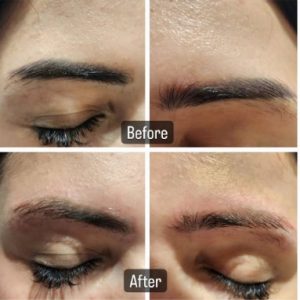
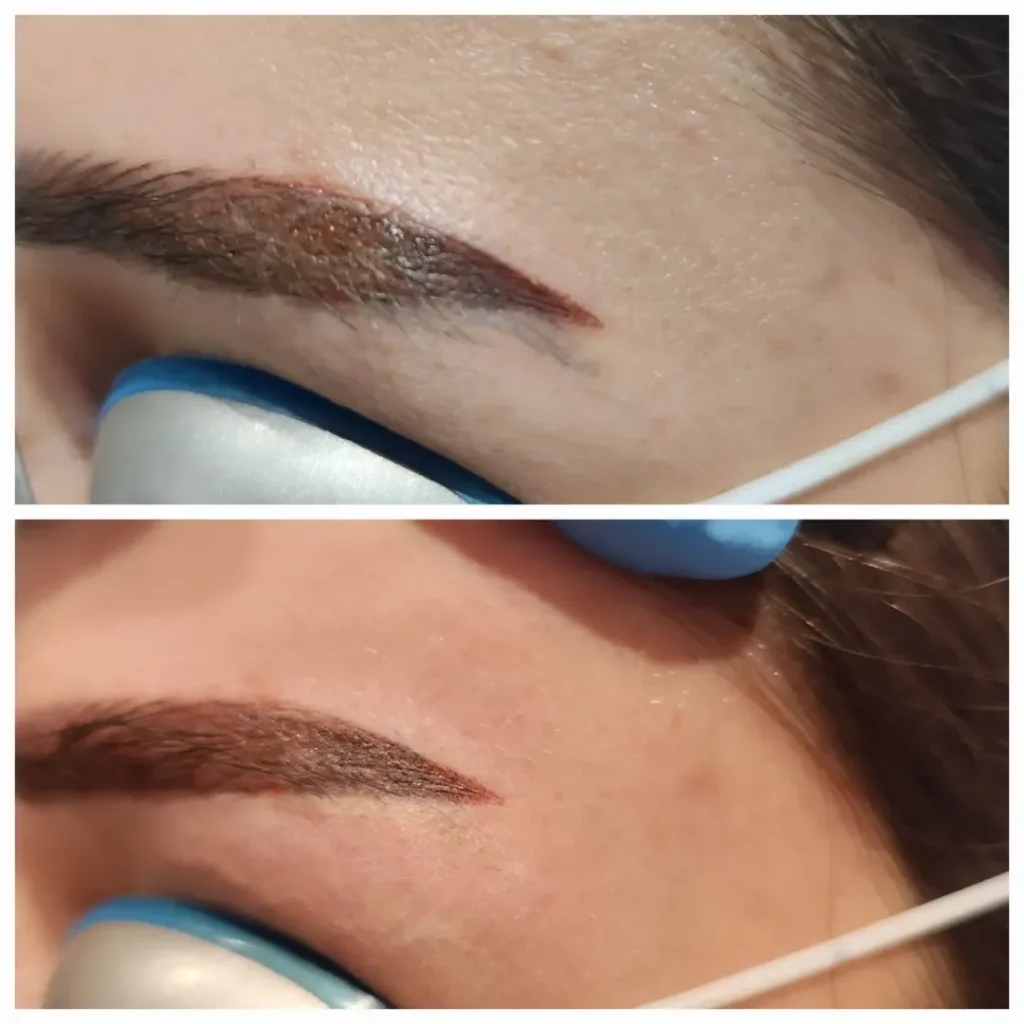
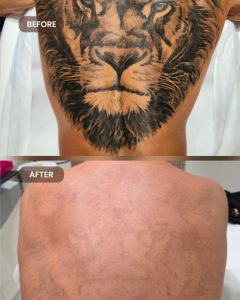
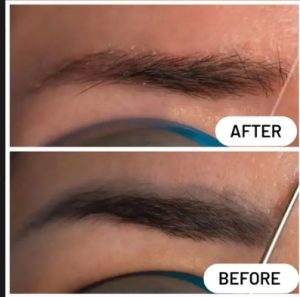
Before and After
Explore real before-and-after results from patients treated at Hortman Clinics. Results vary between patients and may depend on factors including anatomy, skin type, age, medical history, treatment parameters, and individual response. All published patient images are used with appropriate patient consent.
We are here for you. Always.
Everything we do is tailored to your needs, this is why we take our time to take care of you and answer all your questions.