

Complete Guide To Hair Transplant Recovery And Growth
Baldness and hair loss may have a big effect on a person’s confidence and sense of self. Fortunately, many people who want to fight hair loss and restore their hairline have a potential option in hair transplant surgery. This guide covers the hair transplant in Dubai process, from the first consultation to the finished product, with a focus on recovery and what to expect on your way to new hair growth.
Understanding Hair Transplant Procedures
It’s important to comprehend the many hair transplant treatments that are accessible before beginning the healing process:
Follicular Unit Transplantation (FUT)
A strip of skin is removed from the donor location, usually the back of the head, in FUT, sometimes referred to as the strip procedure. Thereafter, this strip is divided into separate follicular units for transplantation.
Follicular Unit Extraction (FUE)
A more recent method called FUE hair transplant involves removing individual follicular units straight from the donor site. Compared to FUT, this approach produces less scarring and a faster healing period. Choosing advanced hair restoration Dubai centers allows patients to access these refined extraction techniques for better aesthetics.
Advanced Robotic Systems
The utilization of robotic technologies, which provide previously unheard-of accuracy in hair graft harvesting and placement, is the most recent development in hair restoration surgery.
The Hair Transplant Timeline: From Surgery To Final Results
Pre-Hair Transplant Surgery: Initial Consultation
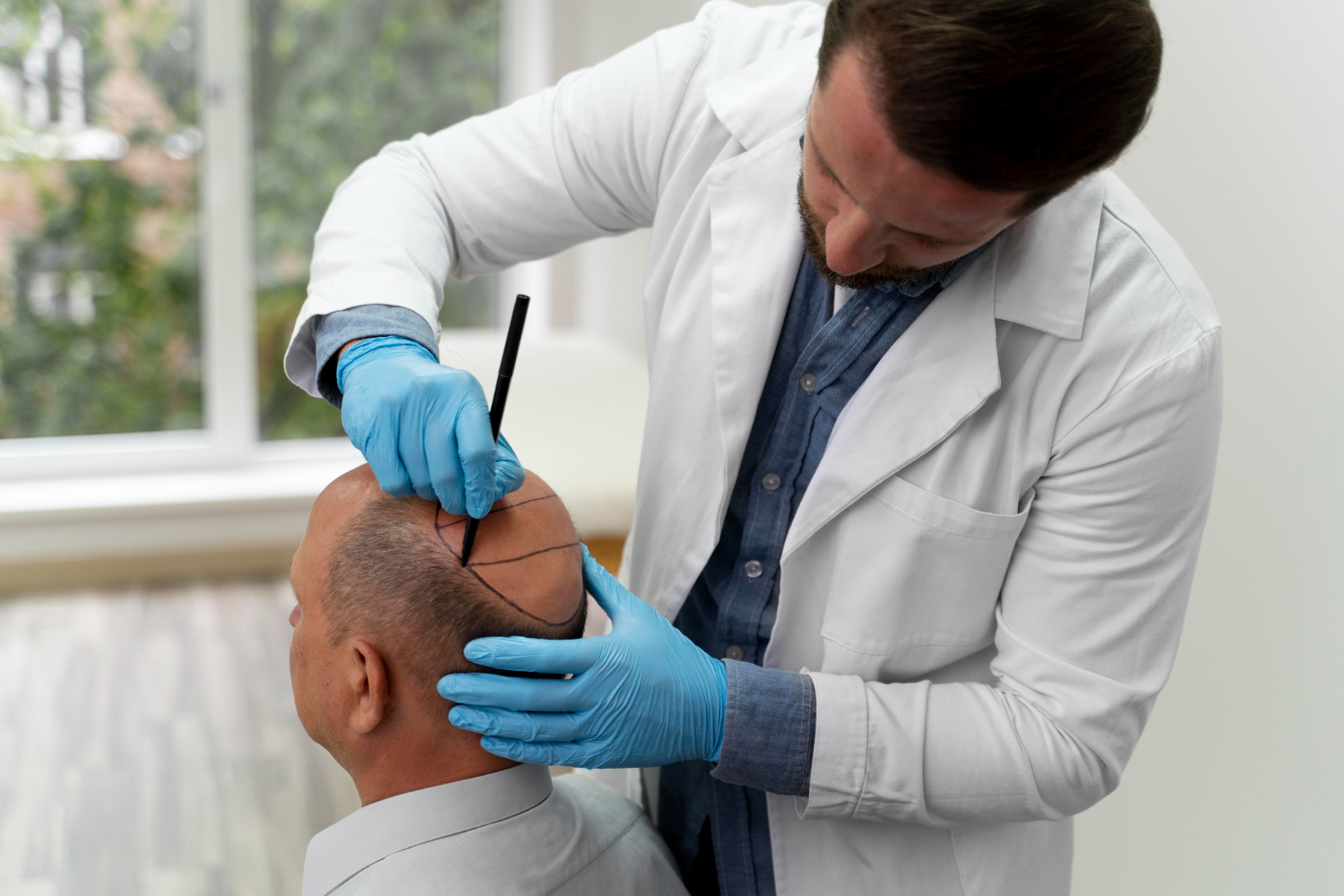
An affordable consultation at a respectable hair transplant clinic is the first step in your hair restoration quest. While some may explore non-surgical hair replacement Dubai options first, a surgical consultation is necessary for permanent results. Your surgeon will do the following at your visit:
- Examine your donor location and pattern of hair loss.
- Talk about your ideal hairline and expectations.
- Describe the alternatives for the hair transplant surgery.
- Make a customized treatment plan available.
The Day Of Hair Transplant Surgery
On the day of the procedure for your hair transplant:
- The donor region, which is often the back of the head, is ready.
- To provide comfort, a local anesthetic is used.
- Grafts are harvested according to the selected technique (FUT or FUE).
- The recipient region is formed using tiny incisions.
- Carefully positioned hair transplants produce a density and hairline that seem natural.
Finding the best hair transplant clinic Dubai ensures that these grafts are handled with the highest level of expertise. Depending on how many grafts are needed, the complete process may take several hours.
Post-Op: The First 24 Hours After Hair Transplant
Following the hair transplant procedure:
- Painkillers can help you cope with any discomfort you may feel.
- The surgeon will provide detailed instructions for aftercare.
- To reduce swelling, it will be recommended that you sleep with your head up.
- For the treatment of pain, over-the-counter medications could be suggested.
Days 1-3: The Immediate Hair Transplant Aftermath
In the initial days following surgery:
- It is typical for the donor and recipient sites to have mild edema and redness.
- The recently transplanted hair follicles will develop a few scabs surrounding them.
- To clean your scalp gently, you must adhere to certain guidelines.
- The transplanted region should not be touched or scratched.
Days 4-7: The Hair Transplant First Week Milestone
As the first week goes on:
- There may be a peak in swelling followed by a decline.
- Scabs grow more apparent, but they will eventually fall off on their own. Viewing before and after hair transplant Dubai galleries can help patients understand what the scalp looks like during this specific healing phase.
- If you follow your surgeon’s directions, you could be permitted to gently wash your hair.
- Keep the transplanted region out of direct sunlight and physically demanding activities.
Weeks 2-4: Entering the Shedding Phase After Hair Transplant
If you find that your transplanted hair is falling out during this time, don’t panic. This is a typical phase of the hair growth cycle known as “shock loss.” Important things to keep in mind:
- It is normal and transient for transplanted hair to shed.
- The hair follicles stay in situ and will ultimately generate new hair.
- To aid in the healing process, keep adhering to the aftercare guidelines.
- You might be allowed to resume modest activity, but first see your surgeon.
Months 1-3: The Resting Phase After Hair Transplant
Patience is essential throughout this time. The transplanted follicles are getting ready for new growth as your scalp heals:
- During this period, there is not much noticeable hair growth.
- There will be substantial healing in the donor location.
- Usually, you may resume your regular hair care regimen.
- To promote growth, some surgeons might advise beginning minoxidil.
Months 4-6: The Early Hair Growth Phase
As you go into the early development period, excitement grows:
- When new hair grows, it usually starts as thin, fine hairs.
- The cycle of hair growth begins.
- The density of hair gradually rises.
- A follow-up consultation could be scheduled to assess your progress.
Months 7-12: Continued Hair Growth And Maturation
You’ll see notable advancements as the one-year mark draws near:
- Hair keeps thickening and growing.
- The surrounding natural hair starts to merge with the transplanted region.
- Your hair may be styled more freely.
- The outcomes begin to show.
Beyond The First Year After Hair Transplant
Improvements can persist even if the majority of patients receive their full benefits in 12 to 18 months. Finding the best hair transplant clinic in Dubai for long-term follow-ups is key to maintaining your investment.
- Hair may keep growing thicker and more mature.
- Maintaining general hair health is part of long-term care.
- To improve density, some patients choose to undergo further operations.
Factors Affecting The Hair Transplant Recovery Timeline
It’s crucial to remember that everyone recovers at a different pace. Your recuperation may be impacted by the following factors:
- Factors related to personal health and recovery
- Respect for post-operative instructions
- The scope of the transplant process
- The cycle of natural hair growth
- The particular method employed (FUT vs. FUE)
Potential Side Effects Of Hair Transplant And How To Address Them
Even if complications are uncommon, it’s crucial to be mindful of any problems:
- Infection (rare but possible)
- Extended redness or swelling
- Unexpected hair loss (usually transient)
- Unhappiness with the visual outcomes
- Donor region scarring (more frequent with FUT)
If you encounter any worrisome symptoms while recovering, always get in touch with your hair transplant facility.
The Importance Of Proper Aftercare For Hair Transplant
For best outcomes, you must adhere to your surgeon’s aftercare guidelines. Important elements of hair transplant aftercare consist of:
- For the first few nights, sleeping with your head up
- Keeping the transplanted region away from touches and scratches
- As instructed, gently wash your scalp
- Keeping your scalp safe from the sun
- Refraining from physically demanding tasks for the suggested amount of time
- Taking prescription drugs as instructed
- Keeping all planned follow-up appointments
Tips For Optimal Recovery And Hair Growth
To maximize the results of your hair transplant procedure:
- Pay close attention to all aftercare recommendations.
- Refrain from smoking and consume alcohol in moderation.
- Consume a well-balanced meal high in vitamins and proteins.
- Drink plenty of water.
- Have patience and keep your expectations reasonable.
- If your surgeon recommends it, think about taking minoxidil.
- Keep your scalp safe from harsh chemicals and extreme heat.
Understanding The Hair Growth Cycle Post-Transplant
Your hair transplant’s outcome is greatly influenced by the hair development cycle. The stages are broken down as follows:
- Anagen (Growth) Phase: New hair actively develops during the anagen (growth) phase. This stage will be reached by transplanted follicles a few months following surgery.
- Catagen (Transition) Phase: Hair development slows significantly during the brief catagen (transition) phase.
- Telogen (Resting) Phase: The hair stops growing and finally sheds during the telogen (resting) phase. The early shedding upon transplantation is caused by this.
- New Anagen Phase: New hair grows from the transplanted follicles as the cycle resumes.
Knowing this pattern can help you be more patient during the healing process, especially during the first shedding period.
The Role Of Hair Transplant Follow-Up Appointments
For the purpose of tracking your development and resolving any issues, routine examinations with your hair transplant surgeon are crucial. Typical follow-up appointments might take place:
- 1-3 days following surgery
- 10–14 days following surgery
- One month following surgery
- Three months following surgery
- Six months following surgery
- One year following surgery
Your surgeon may evaluate recovery, offer advice on hair maintenance, and make sure you’re on track for the best outcomes at these sessions.
Long-Term Care For Transplanted Hair
Maintaining your new hair is crucial after you’ve reached your desired outcome:
- Maintain a nutritious diet and way of life.
- Use mild hair care products.
- Prevent sun damage to your scalp.
- To preserve density, think about continuing therapies like minoxidil.
- Treat any further hair loss symptoms right now.
Recall that your natural hair may continue to decrease over time, but transplanted hair is resistant to future loss.
Conclusion
For people who suffer from baldness and hair loss, hair transplant surgery may be a transformative experience. Even if the healing procedure takes time, the outcome may significantly boost your confidence and appearance.
Important lessons learned:
- Recognize the many hair transplant techniques that are available.
- Be patient with the procedure and adhere to the healing schedule.
- Follow the aftercare instructions to the letter.
- Keep all of your follow-up appointments.
- Keep your expectations for progress and outcomes reasonable.
We at Hortman Clinics in Dubai advise you to arrange an affordable consultation with a respectable hair transplant clinic if you’re thinking about getting a hair transplant. You may have the full, natural-looking hair you want with the aid of a professional evaluation of your unique demands and the development of a customized treatment plan.
Never forget that every hair restoration experience is different. You may anticipate having a thicker head of hair and feeling more confident about your looks if you receive the proper care, patience, and knowledge.
FAQs
How does a hair transplant at Hortman Clinics in Dubai work?
A hair transplant at Hortman Clinics Dubai involves relocating healthy hair follicles from a donor area to thinning or bald regions. Techniques like FUT, FUE, and robotic-assisted transplants ensure natural-looking results and minimal scarring.
What should I expect during the first week after a hair transplant?
In the first week, mild swelling, redness, and small scabs at the transplanted site are normal. Following aftercare instructions, avoiding sun exposure, and gentle scalp cleaning are essential for proper healing and successful hair growth.
When will I start seeing new hair growth after a transplant in Dubai?
New hair typically begins to appear around 3–4 months post-transplant, starting as fine, thin strands. Full results and improved density usually develop between 12 and 18 months, depending on the technique and individual growth cycles.
Are hair transplants at Hortman Clinics reversible or permanent?
Transplanted hair is generally permanent since follicles are resistant to further hair loss. However, ongoing care with gentle shampoos, a balanced diet, and optional treatments like minoxidil can help maintain healthy, dense hair.
Who is an ideal candidate for hair restoration in Dubai?
Ideal candidates are adults experiencing thinning hair or baldness who have sufficient donor hair. Hortman Clinics Dubai specialists assess hair density, scalp health, and individual goals to create a customized, natural-looking treatment plan.