



Liquid joint replacement is an emerging treatment option that involves injecting a gel-like substance into the knee joint to cushion and reduce friction between the bones.
If everyday activities such as walking, climbing stairs, or getting up from a chair have started to hurt, you may have wondered whether there is an alternative to conventional joint replacement surgery. This is where liquid joint replacement, also called intra-articular hydrogel injections, is increasingly becoming helpful.
In this blog, we explore more about liquid joint replacement and how it helps in the management of knee joint pain.
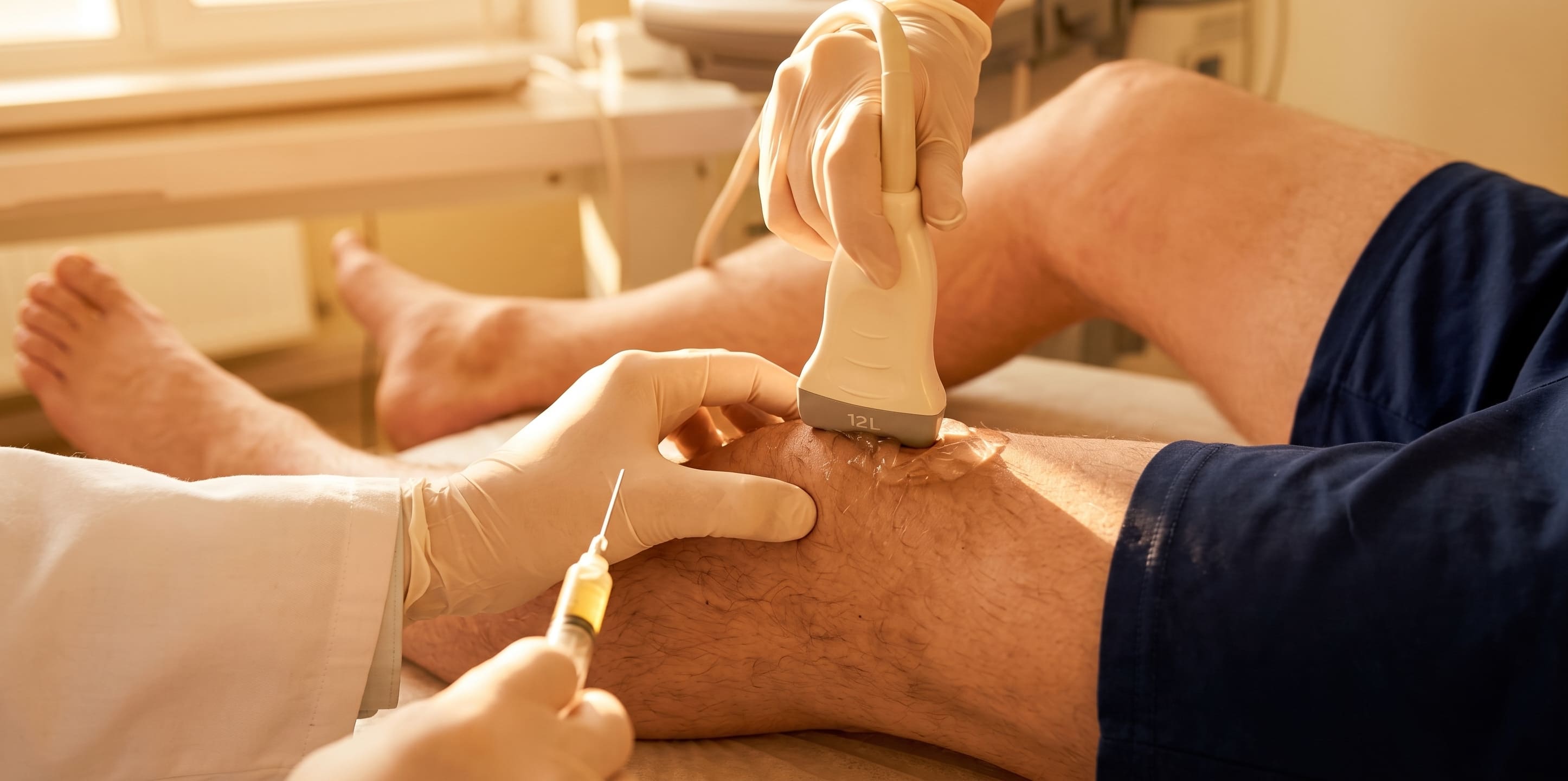
What is Liquid Joint Replacement?
Liquid joint replacement is essentially the administration of different materials into the knee joint to relieve pain and inflammation associated with osteoarthritis. While surgery has always been the mainstay for treating advanced cases of knee osteoarthritis, liquid joint replacement may be a minimally invasive treatment option.
The term 'liquid joint replacement' is not a standard medical classification. It is sometimes used to describe injectable treatments for joint pain, including hydrogel-based treatments and other intra-articular injections.
Arthrosamid is an injectable hydrogel that is administered directly into the knee joint. Other injectable biomaterials may be designed to form or cross-link into a gel after injection. It is a non-absorbable, biocompatible polyacrylamide hydrogel consisting of 97.5% sterile water and 2.5% polyacrylamide. Its non-absorbable nature allows the hydrogel to remain in the knee rather than being rapidly broken down or absorbed.
The goal of liquid joint replacement is not to replace the entire joint but to help create a more favorable environment within a damaged joint and potentially address some of the processes contributing to pain and cartilage deterioration.
How Does a Liquid Joint Replacement Treatment Help a Painful Joint?
There are different possible mechanisms that show how liquid joint replacement treatment works!
1. Improve lubrication
A healthy joint has a highly specialized environment that allows surfaces to move against one another with very low friction. Some hydrogels aim to reproduce or support aspects of the joint's natural lubricating environment, reduce friction, and improve function. Research has explored hydrogel materials with lubricating properties and the ability to remain associated with cartilage surfaces.
2. Provide a temporary cushioning or protective environment
Some injectable biomaterials are designed to create a hydrated, viscoelastic material within the joint. However, the behavior of an injectable hydrogel depends heavily on its composition, cross-linking method, mechanical properties, and ability to remain stable inside the joint.
3. Deliver medication directly into the joint
Another important application is drug delivery. Instead of injecting a therapeutic molecule alone, researchers can incorporate therapeutic molecules into a hydrogel to bring about pain relief and improved function in the knee joint. This approach could be helpful when the doctor wants to achieve a local effect without relying entirely on systemic drug administration.
4. Potential cartilage support
Some experimental hydrogel formulations are being investigated as scaffolds for cartilage repair and tissue regeneration. However, this should not be interpreted as evidence that Arthrosamid regenerates damaged cartilage. Researchers are currently investigating whether these materials can support cell attachment, migration, and tissue regeneration
Who May Benefit From Liquid Joint Replacement?
Liquid joint replacement is not for everyone with osteoarthritis. If you have joint pain, the first step is identifying what is causing it.
If you have joint pain, it may arise from one of the following:
- Osteoarthritis
- Cartilage injury
- Previous trauma
- Inflammatory arthritis
- Tendon or ligament problems
- Other joint conditions
You may be a suitable candidate for liquid joint replacement if you:
- Have mild-to-moderate osteoarthritis
- Get inadequate relief from pain medications, physiotherapy or weight management
- Are looking to delay surgery
Liquid joint replacement is not recommended in people with severe or advanced arthritis, active infections, skin issues, or a known allergy to hydrogel or hyaluronic acid. Your suitability for liquid joint replacement should be assessed individually by an appropriately qualified clinician.
Why Are Injectable Treatments Being Investigated for Knee Osteoarthritis?
Management of knee osteoarthritis usually begins with measures such as therapeutic exercise, physical activity, weight management where appropriate, education and symptom management. Treatment is tailored to the individual's symptoms, function, and disease severity.
So, why is there a need for injectable joint treatments for osteoarthritis?
Well, osteoarthritis is more complicated than simply “wear and tear.” Osteoarthritis is a disease involving multiple structures of the joint:
- Articular cartilage
- Synovial tissue
- Subchondral bone
- Ligaments
- Muscles and surrounding tissues.
As osteoarthritis progresses, cartilage can deteriorate, and the joint environment can become increasingly inflammatory. This results in
- Pain
- Stiffness
- Reduced mobility
- Difficulty performing everyday activities.
Traditional intra-articular treatments can provide symptom relief, but one challenge with conventional injections is that therapeutic substances may leave the joint relatively quickly.
Injectable hydrogel systems are being investigated partly because their three-dimensional polymer networks can potentially retain therapeutic molecules within the joint and release them in a more controlled manner.
Is Liquid Joint Replacement the Same as Arthrosamid?
Liquid joint replacement is a term sometimes used to describe injectable treatments intended to reduce symptoms associated with knee osteoarthritis. Arthrosamid is a non-absorbable, biocompatible polyacrylamide hydrogel designed for intra-articular use in adults with knee osteoarthritis.
Other injectable treatments, such as hyaluronic acid, are different products with different compositions, mechanisms, and evidence. They should not be considered interchangeable with Arthrosamid.
How Does Arthrosamid Work?
An advanced hydrogel implant used to treat knee osteoarthritis. Here’s how it works!
- When injected into the knee joint, Arthrosamid becomes integrated within the tissue lining.
- It begins to soften and increase the elasticity of the tissue to decrease joint stiffness and pain, thereby improving knee function.
- Within 6 to 12 weeks of administering the hydrogel implant, it becomes fully integrated within the synovial tissue lining of the knee joint.
It is this unique characteristic of being able to integrate with the knee joint lining tissue that brings about a significant reduction in osteoarthritic knee pain and improvement in function.
Is Liquid Joint Replacement an Alternative for Knee Replacement Surgery?
Liquid joint replacement is not an alternative for knee joint replacement surgery.
A total knee replacement involves the surgical removal of the damaged joint surfaces and replacing them with artificial components.
An injectable hydrogel is fundamentally very different. Depending on the material used, liquid joint replacement injections aim to:
- Improve the local joint environment
- Provide lubrication
- Deliver a therapeutic substance
- Reduce symptoms
Liquid joint replacement is still an emerging minimally invasive approach that researchers are investigating for joint preservation and symptom management.
Are There Limitations or Risks of Liquid Joint Replacement?
Liquid joint replacement is still largely under research and has shown promising results so far. A few limitations of this treatment:
- Not recommended for advanced osteoarthritis cases
- Has strict candidate requirements and cannot be used in everyone with osteoarthritis
- Not a permanent treatment like surgery
Because Arthrosamid is non-absorbable and designed to remain in the knee, patients should discuss the long-term implications of treatment with their clinician before proceeding.
As with any intra-articular injection, Arthrosamid treatment can be associated with side effects. These may include:
- Temporary pain
- Swelling
- Warmth or discomfort around the injection site
- Infection is a rare but potentially serious complication of any injection into a joint.
Patients should discuss their individual risks and the product-specific safety information with their treating clinician.
What are the Potential Advantages of Liquid Joint Replacement?
Liquid joint replacement offers several benefits: Your suitability for liquid joint replacement should be assessed individually by an appropriately qualified clinician.
The injections avoid the need for large incisions required for joint replacement surgery.
Therapeutic substances can be delivered directly into the joint.
Hydrogels can be engineered to release drugs or biological molecules over time.
Some formulations are being designed to support tissue repair.
Injectable materials can potentially conform to irregular spaces within a joint.
Key Takeaway!
Liquid joint replacement is a promising area of osteoarthritis therapy. However, it should not be considered an alternative to conventional joint replacement surgery. Arthrosamid is available at Hortman Clinics in Dubai, where patients can undergo an assessment to determine whether it is appropriate for their knee osteoarthritis.
If joint pain is interfering with your everyday life, getting a proper clinical assessment is the best place to start. Get a consultation with our orthopedic expert at Hortman Clinics, Dubai, today!
HORTMAN CLINICS NEWS
Related News


We are here for you. Always.
Everything we do is tailored to your needs, this is why we take our time to take care of you and answer all your questions.