


TCA CROSS Treatment
TCA CROSS is a targeted skin treatment that improves the appearance of deep, indented acne scars. It is particularly useful for narrow ice pick scars and select boxcar scars that may resist regular peels and facial creams.
If you have tried creams, peels, and maybe even lasers, and those narrow, deep acne scars are still there, it may be worth discussing TCA CROSS with your dermatologist. Let's walk through what it actually involves.
Book Now
Last medically reviewed : November 2, 2026
What Is
What is TCA CROSS Treatment?
TCA CROSS is based on the idea that a small, controlled injury at the base of the scar nudges your skin to build new collagen where it's needed. That slowly lifts the scar from underneath.

How it works
How Does TCA Cross Work?
The skin's healing response stimulates collagen remodeling over time, which may gradually improve the depth and appearance of selected acne scars.
Results vary between individuals, and complete scar removal cannot be guaranteed.
During TCA CROSS, the dermatologist applies trichloroacetic acid directly to selected scars.
This produces a visible white frosting response, which reflects coagulation of skin proteins at the treatment site.
The clinician assesses this response together with the application technique and the characteristics of each scar to guide treatment.
Accurate application is important because the acid can damage the surrounding skin if it spreads beyond the intended treatment area.
Which Acne Scars Can TCA CROSS Treat?
Not all scars react the same to TCA CROSS treatment.
- Ice pick scars are the most suitable candidates for this procedure. They are narrow and deep, and this is where TCA CROSS is most effective.
- Boxcar scars, especially the smaller, sharply edged ones, also respond well.
- Rolling scars can improve a bit, but they're often better handled with subcision or other methods, sometimes combined with TCA CROSS.
Wide, shallow, or very widespread scarring usually needs a different approach, and your dermatologist can tell you which one fits.



Who
Who is a Suitable Candidate for TCA CROSS?
A dermatologist may consider a TCA CROSS treatment if you
- Have narrow, deep ice pick scars or selected boxcar acne scars.
- Have acne that is sufficiently controlled for scar treatment.
- Understand that improvement is gradual and may be partial.
- Can follow the required aftercare and attend follow-up appointments.
TCA CROSS may need to be deferred or avoided in certain circumstances.
This includes active skin infections, poor wound healing, or other conditions that may increase the risk of complications.
If you have a history of abnormal scarring, you should inform your dermatologist during the consultation.
You should also mention any recent or current acne medication use.
Previous cosmetic procedures should also be discussed so the dermatologist can assess whether TCA CROSS is appropriate for you.
What Happens During a TCA CROSS Procedure?
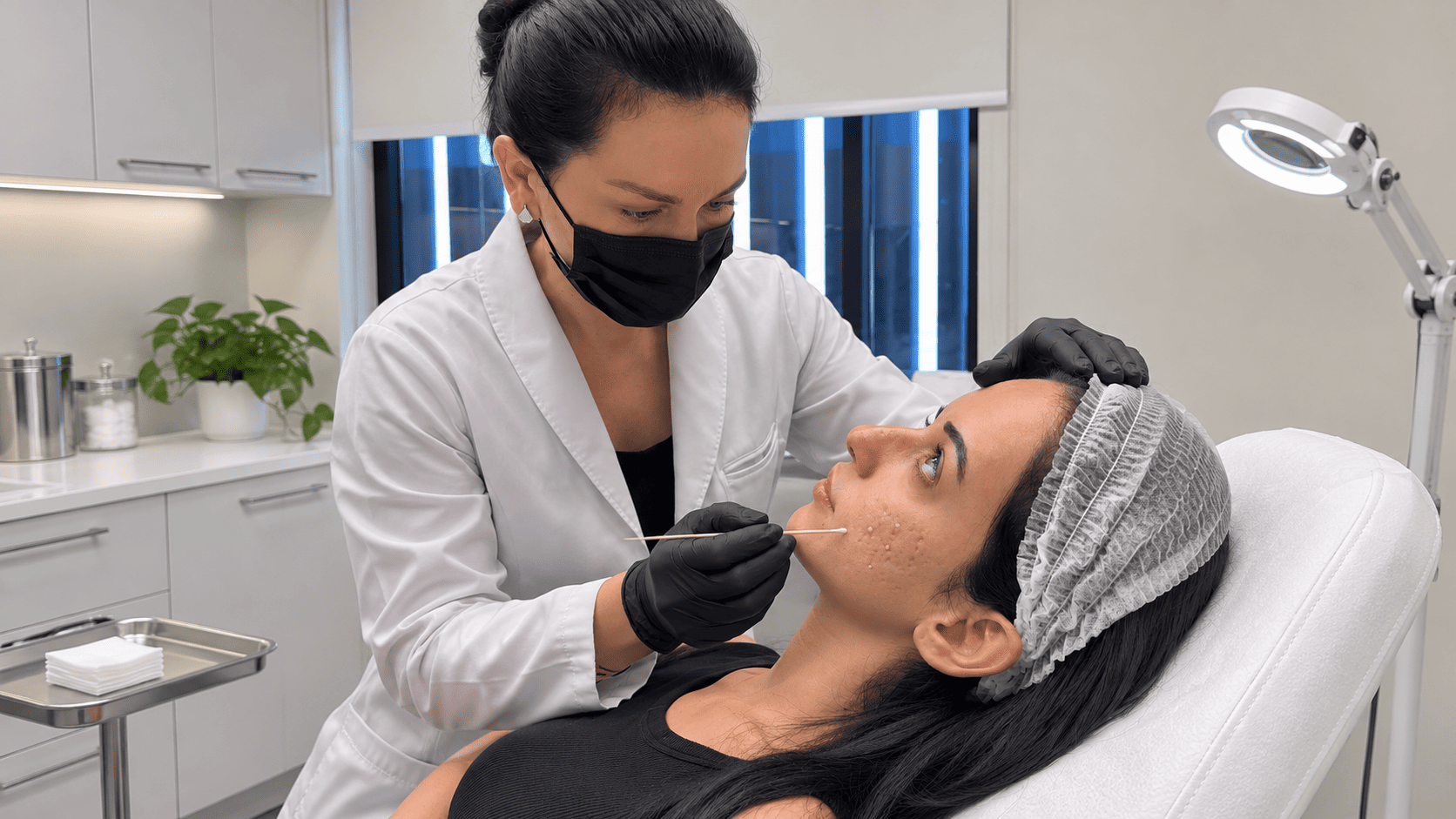
At Hortman Clinics, a TCA CROSS procedure is performed by experienced and DHA-licensed dermatologists after a thorough assessment. The steps of the procedure involve:
- You will be seated in a comfortable semi-reclined position.
- The dermatologist cleans the target area with chlorhexidine- or saline-soaked gauze to remove dirt and impurities.
- The dermatologist then uses a fine-tipped instrument, such as a BD Syringe or a toothpick dipped in TCA, to apply it to the base of the acne scar.
- The instrument is then removed as frosting begins to appear on the skin (which takes a few seconds)
- The procedure is repeated for the remaining scars.
- The skin is intermittently cleansed with saline or chlorhexidine.
Preparation
TCA CROSS Results and Recovery: What to Expect?
They may then become red as the skin begins to respond to the treatment.
Small scabs or crusts may develop over the treated areas during the healing process.
These scabs typically fall off within several days to about a week, although healing time can vary from person to person.
Do not pick, scratch, or pull at the scabs.
Doing so may increase the risk of infection, pigmentation changes, or additional scarring.
Follow your dermatologist's aftercare instructions carefully and use sun protection as advised.
Improvement in acne scars does not happen immediately because collagen remodeling takes time.
Changes in the appearance and depth of the scars may become more noticeable over the following weeks and months.
Several treatment sessions may be required to achieve the desired improvement.
The number of sessions and the interval between treatments depend on the type and depth of the scars, your skin's response, and your dermatologist's assessment.
Your treatment plan may be reviewed and adjusted as healing progresses.
Risks and Side Effects
TCA CROSS is a clinician-performed procedure with potential benefits and risks. A dermatologist should assess your scar type, skin characteristics, and medical history before recommending treatment. Possible complications include:
- Post-inflammatory hyperpigmentation: In some people, this procedure may cause dark marks where the acid was applied. It is more common in people with darker skin tones.
- Persistent redness: Sometimes, the post-treatment redness may linger longer than expected.
- Hypopigmentation: In some individuals, TCA CROSS treatment may lead to formation of lighter skin patches. This is, however, less common.
- Infection: There is a risk of infection if you pick at scabs or do not keep the area clean.
- Worsened scarring: Some people may develop raised or hypertrophic scars, which can happen if too much acid is used or it spreads beyond the scar.
Careful technique and appropriate aftercare can help reduce risk, but complications cannot be completely prevented.
TCA CROSS Treatment Cost in Dubai
The final cost depends on the number of scars treated, the size of the treatment area, the number of sessions required, and the clinic's fee structure.
A personalised quotation will be provided to you after an assessment.
TCA CROSS vs Other Acne Scar Treatments
Different acne scars respond to different treatment approaches. No single procedure is ideal for every scar type. Here’s how TCA CROSS compares with other acne scar treatments:
| Treatment | Best recommended for |
|---|---|
| TCA CROSS | Deep ice pick scars and select boxcar scars |
| Microneedling | Usually considered for broader textural irregularities and select shallow atrophic scars |
| Subcision | Used for rolling scars tethered by fibrous bands beneath the skin |
| Fractional laser resurfacing | Effective in improving skin texture and select atrophic scars |
DOCTOR
Book a Consultation at Hortman Clinics
During your consultation, your clinician will assess your scars, explain the expected benefits and possible risks, and discuss whether TCA CROSS alone or a combination of treatments may be most appropriate.
Book your acne scar consultation today to discuss a personalised treatment plan.
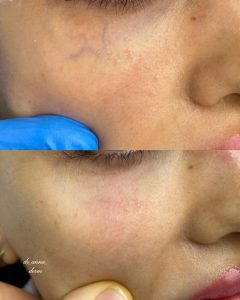
Before and After
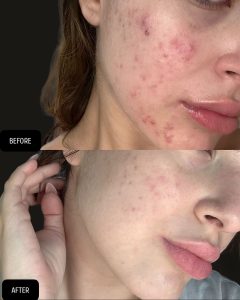
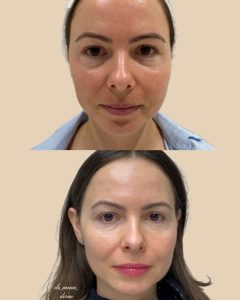
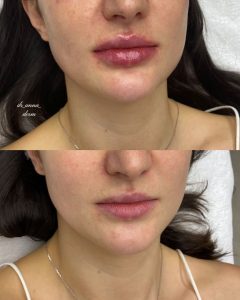
Explore real before-and-after results from patients treated at Hortman Clinics. Results vary between patients and may depend on factors including anatomy, skin type, age, medical history, treatment parameters, and individual response. All published patient images are used with appropriate patient consent.
FAQs
Frequently asked questions
You may experience a brief stinging or burning sensation during treatment, followed by temporary redness or soreness. Discomfort varies between individuals. Your dermatologist can explain appropriate measures to improve comfort.
TCA CROSS is effective in improving the appearance of select acne scars but does not guarantee their complete removal.
It may take a few weeks to months to see noticeable improvement in the appearance of scars following TCA CROSS treatment because results improve as collagen remodeling progresses.
Although TCA CROSS improves the appearance of scars, it may cause additional scarring, pigmentation, enlarged treated depressions, and prolonged inflammation if performed incorrectly. Therefore, it is important to undergo the procedure with a trained, licensed, and experienced dermatologist.
Yes. TCA CROSS procedure is routinely combined with other procedures such as subcision, microneedling, or fractional laser resurfacing, when the dermatologist considers it necessary.
Neither is universally better. TCA CROSS is particularly effective for selected narrow, deep scars, while microneedling may suit broader textural concerns. Some patients benefit from a combination approach.
TCA CROSS is a scar-remodeling procedure, not a treatment for active acne. It is important to address active acne before considering an acne scar procedure.
Yes. Expect visible redness and small scabs or crusts at treated sites for several days. Healing varies, and pigmentation changes or prolonged redness may occur. Follow your dermatologist's aftercare advice and avoid picking at treated areas.
We are here for you. Always.
Everything we do is tailored to your needs, this is why we take our time to take care of you and answer all your questions.