

What To Expect Before, During, And After A Hair Transplant In Dubai
Many people suffer greatly from hair loss, including alopecia and pattern baldness, which can cause emotional distress and lower self-esteem. People frequently seek efficient hair loss treatments as a result of this significant hair loss.
As a result, a lot of people are resorting to hair transplant surgery, which promises to restore confidence in addition to hair.
Given the importance of this choice, it is essential to comprehend the hair transplant procedure, post-transplant treatment, and the post-transplant experience. It’s important to remember that a hair transplant in Dubai, which entails transplanting your original, natural hair to the places that are thinning, takes time and patience.
This blog helps prospective hair transplant patients set reasonable and correct expectations by providing insightful information about what to anticipate from the procedure.
For a thorough look at this revolutionary cosmetic technique that uses hair restoration surgery to give you thicker hair, keep reading.
The Hair Transplant Process: A Detailed Overview
Follicular Unit Extraction (FUE) and Follicular Unit Transplantation (FUT) are the two main methods used in hair transplantation.
FUT or Strip Surgery
A strip of skin from the back of the head, an area resistant to hair loss, is removed by the hair transplant surgeon during a FUT operation. The donor site is sewn or stapled shut, leaving a scar line across the back of the scalp that is frequently evident despite being partially hidden by hair growing over it. Under a microscope, the healthy hair follicles in this strip are separated into individual grafts. Depending on the required density, one to four hair follicles are present in each graft. After that, the surgeon places these grafts in the bald spots. One drawback of this method is the linear scar left on the donor area, although modern techniques help create natural-looking results.
FUE Method
The hair transplant surgeon makes tiny holes, and the harvested hair follicles are used to implant the graft right away. This advanced hair restoration Dubai can provide more natural-looking results while leaving minimal scarring.
FUT and FUE are both successful hair transplant methods, each with special benefits. The type of hair loss, scalp health, and individual preferences all play a role in the decision between the two.
Before the Hair Transplant: Steps to Prepare
Long before the actual treatment, preparations are made for a hair transplant. To ensure a successful hair transplant, follow these essential steps:
Consultation
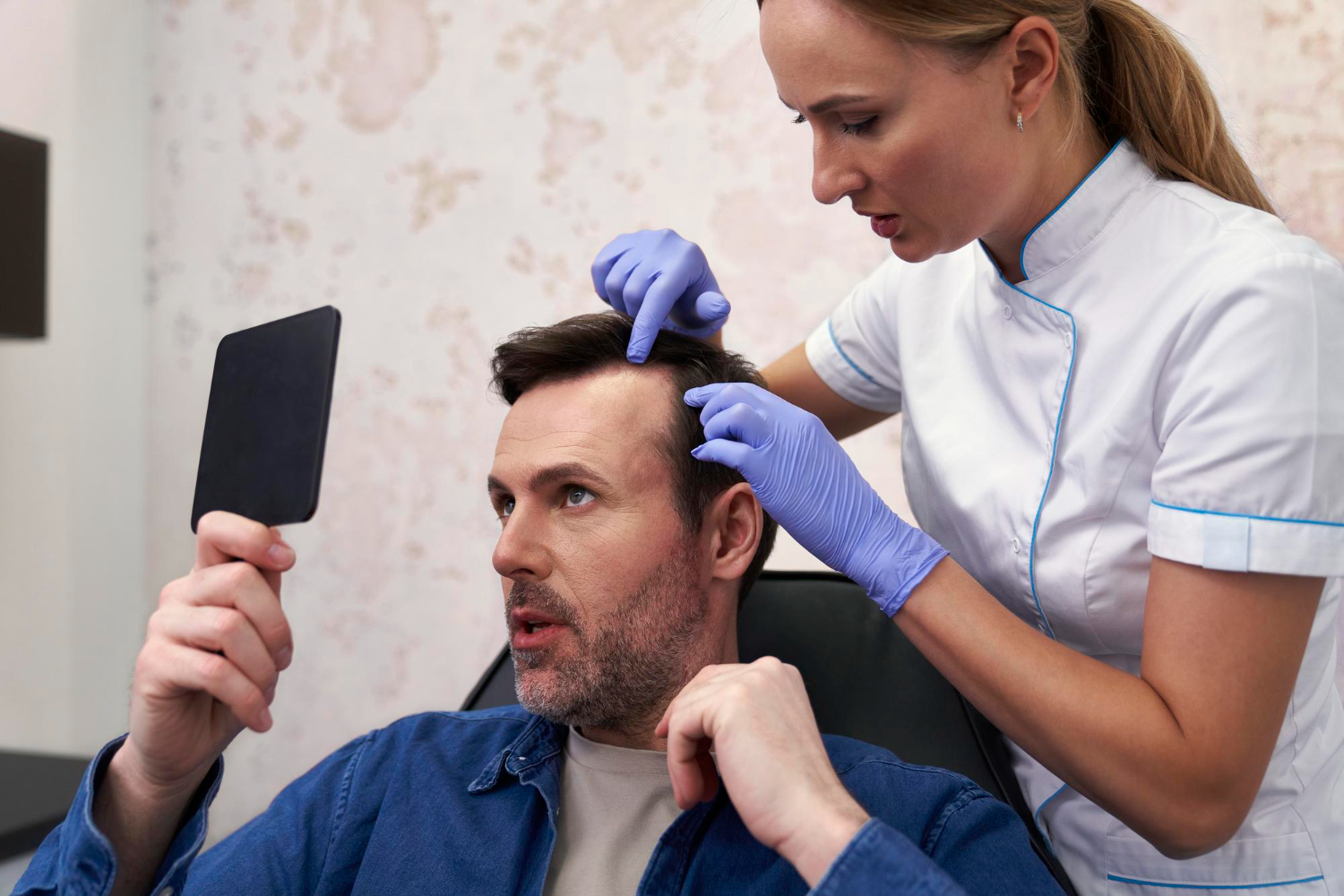
A complimentary consultation with one of our knowledgeable hair transplant doctors is the first step in the process. In this consultation, our surgeon at the best hair transplant clinic Dubai assesses the candidate’s fitness for a hair transplant, taking into account the patient’s medical history, the quality of the donor hairs, and the degree and pattern of baldness.
Medical and Lifestyle Preparation
In order to prevent bleeding during the surgery, the surgeon may suggest that you cease taking certain drugs and supplements. Limiting alcohol intake and giving up smoking are also advised because they can affect the healing process.
Hair and Scalp Preparation
You should take care of your hair and scalp in the month before the surgery. Steer clear of harsh chemical treatments and maintain a clean scalp. In order to make the surgery easier, some surgeons might also advise cutting your hair short.
Recall that the success of your hair transplant can be greatly impacted by setting realistic expectations and making sufficient preparations. We’ll look at what occurs on the day of the hair transplant process in the following part.
The Hair Transplant Process: What Happens on the Day
Arriving for a hair transplant procedure might cause a range of emotions. Some of the worry might be reduced by knowing what the day will entail. The standard schedule for the day of your hair transplant procedure is as follows:
Early Morning: Arrival and Prep
Patients usually meet with the experienced hair transplant surgeon when they arrive at the hair transplant clinic to go over last-minute details and address any unanswered queries. The surgeon may mark the scalp to indicate the places that will be transplanted and take pictures for a “before” comparison.
Mid-Morning: Commencement of the Procedure
The surgeon at the best hair transplant clinic in Dubai starts the donor hair extraction procedure after giving a local anesthetic. Depending on how many grafts are required, this procedure may take several hours. Patients can unwind and even watch movies or listen to music during this time.
Afternoon: Implantation of Grafts
The implantation period starts after lunch. Each transplant is carefully placed after the surgeon makes tiny incisions in the recipient locations. They guarantee the proper direction and angle for a result that looks natural.
Late Afternoon: Wrapping Up
Following the end of the hair transplant surgery, the treated areas are bandaged, and the donor area is treated with Polysporin ointment. Instructions for post-operative care, which may include painkillers and advice on how to manage initial discomfort, are given by the surgeon.
The Post-Transplant Experience: First Week Recovery
The healing phase is crucial to the hair transplant’s effectiveness. What to anticipate in the first week following surgery is as follows:
Days 1-3: Rest and Care
Rest is essential in the first several days following treatment. To minimize swelling, patients should keep their heads up, even when they are sleeping.
Any bandages can often be taken off by the end of the first day. As part of the healing process, some individuals may have scabbing around the transplanted hair.
Days 4-7: Gentle Cleaning
Patients can use a special shampoo supplied by the clinic to gently clean the transplanted area around four days after surgery. Don’t rub or scrape your scalp.
Days 7–10
Most scabs begin to fall off naturally during this stage, and patients can gradually return to normal daily activities while continuing gentle scalp care.
Life After Hair Transplant: Expectations vs. Reality
It is easier to control expectations and discern between popular misconceptions and realities when one is aware of the timing for hair development following transplantation. Let’s examine the expected growth schedule after a hair transplant:
- Weeks 1–6: It’s common for the transplanted hair to fall out at first. New hair growth may occur in certain patients.
- Months 4-6: Before and after hair transplant Dubai shows that patients usually see an increase in hair growth between months four and six. The new hairs are fine and thin, but they will eventually get thicker.
- Months 6–9: Hair keeps thickening and growing.
- Months 10–12: By this time, the majority of patients have fully experienced the transplant’s effects.
Let’s now contrast popular perceptions with the actual post-transplant experience. The purpose of this comparison table is to give a more accurate picture of the post-transplant experience and to set reasonable expectations.
|
Expectation |
Reality |
|
Immediate outcomes |
After ten to twelve months, the full effects of the transplant are usually apparent. |
|
No pain following surgery |
For a few days following the surgery, some individuals have some scalp irritation. |
|
In bald areas, 100% coverage |
The degree of hair loss and the quantity of grafts transplanted determine how much coverage there is. |
|
Unnoticeable transplant |
Although there might be some scarring, expert surgeons can minimize it. |
It is true that a successful hair transplant can increase self-confidence and restore a fuller head of hair. But it’s important to approach the process with reasonable expectations, comprehend the hair transplant surgery, and be aware of the reality of the post-transplant experience. This will guarantee a good overall experience and contentment with the outcomes. We’ll examine the actual cost of hair transplants in the following section.
The Reality of Hair Transplant Cost
The price of a hair transplant varies greatly, much like any medical operation. Even though you might be excited to find a way to stop hair loss, it’s important to know what influences the cost of a hair transplant.
- Number of transplants
- Method used
- Experience and reputation of the surgeon
- Additional services and follow-up care
Wrap Up
The decision to have a surgical hair transplant or a non-surgical hair replacement Dubai is a big one, and experiencing hair loss can be upsetting. But if you have the knowledge you need, you can make an informed choice that best fits your unique situation.
It is essential to comprehend every step of the hair transplant procedure, from planning to the aftermath. With this information, you may confidently approach the process and properly manage your expectations.
Recall that patience, reasonable expectations, and faith in Hortman Clinics in Dubai as your guide are essential for a successful hair restoration journey. Do not hesitate to schedule an affordable consultation if you’re thinking about getting a hair transplant and would like further information.
FAQs
What is the difference between FUE and FUT hair transplant methods?
FUE (Follicular Unit Extraction) involves removing individual hair follicles and implanting them into thinning areas, leaving minimal scarring. FUT (Follicular Unit Transplantation) removes a strip of scalp from the donor area, which is then divided into grafts for transplantation. Both methods are effective, but the right option depends on your hair loss pattern, scalp condition, and personal preferences.
How long does it take to see results after a hair transplant?
Hair transplant results take time to develop. Transplanted hair may initially shed within the first few weeks, which is a normal part of the process. Noticeable hair growth usually begins around four to six months, while full results are typically visible after 10 to 12 months.
Is a hair transplant procedure painful?
Hair transplant procedures are generally performed under local anesthesia, so patients experience minimal discomfort during surgery. Mild soreness, swelling, or scalp irritation may occur for a few days after the procedure, but these symptoms usually improve quickly with proper aftercare.
What should I avoid before and after a hair transplant?
Before surgery, patients are often advised to avoid smoking, alcohol, and certain medications that may increase bleeding. After the procedure, it is important to avoid touching or scratching the scalp, strenuous exercise, direct sun exposure, and harsh hair products during the recovery period.
Are hair transplant results permanent?
Yes, transplanted hair is generally permanent because the follicles are taken from areas resistant to hair loss. However, existing non-transplanted hair may continue to thin over time, which is why some patients may require additional treatments or future hair transplant sessions.