


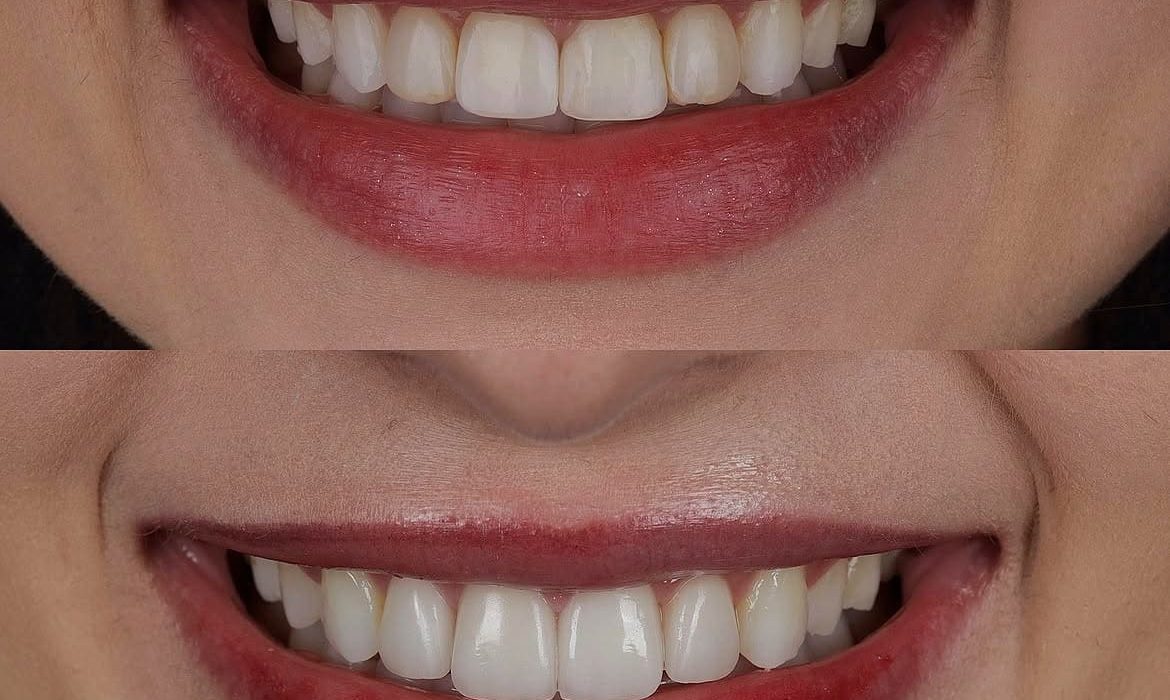
One of the first things people notice about you when they meet you is your smile. So if your teeth are stained, chipped, uneven, or worn, it can affect your smile and confidence.
Modern dentistry offers advanced treatments like veneers to restore the form, function, and aesthetics of your teeth. These are extremely popular worldwide, including among patients in Dubai and across the UAE.
We’ve got you a guide that explains what veneers actually are, their different types, their benefits and limits, and how to choose with confidence.
What are Dental Veneers?
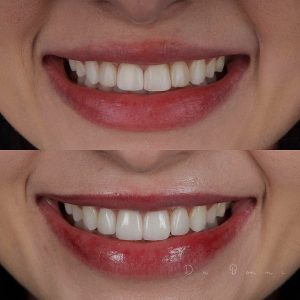
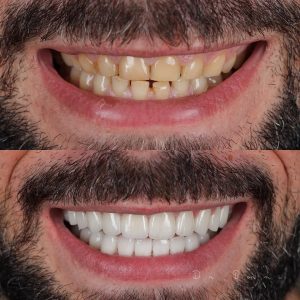
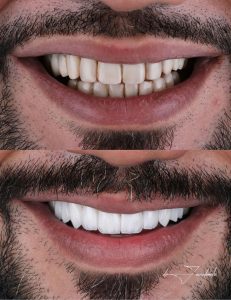
Veneers are thin shells, made of tooth-colored composite resin or porcelain. They are bonded to the front surface of your teeth with dental bonding cement. Dental veneers can change the shape, color, size, and alignment of your teeth, enhancing your smile. However, they are not a one-stop solution for everyone.
Who Should Get Dental Veneers?
Aesthetic and cosmetic dentists recommend veneers to treat:
- Stained or discolored teeth that do not respond to whitening
- Chipped or slightly broken teeth
- Small gaps between front teeth
- Mildly crooked or uneven teeth
- Worn edges or teeth that look short or misshapen
- Teeth with uneven enamel
Veneers cover only the front surface of your teeth, making them far more conservative than crowns, which cover the whole tooth.
Benefits of Dental Veneers for Front Teeth
Veneers are extremely popular among patients who are looking for a celebrity-like smile. When well-planned and well made, veneers can offer several benefits:
- Give a natural-looking improvement in color, shape, and size of your teeth
- Are stain resistant, especially when made of porcelain and ceramic
- Give your smile a quick cosmetic upgrade compared with long orthodontic treatment
- Deliver better confidence when smiling, speaking, and photos
- Are customizable, as veneers can be matched to your face, lips and skin tone
Types of Veneers for Front Teeth
When you are considering a dental treatment, it is natural to want the most appropriate treatment option. However, different types of veneers suit some people better than others.
Composite veneers are made from tooth-colored resin and placed directly on the tooth in one visit. Sometimes, they are also fabricated in a lab.
Best for: Minor tooth corrections, when the individual wants a reversible or a low-cost option.
Pros:
- Require removal of little or no enamel
- Can be completed in a single visit if placed directly
- Easier and cheaper to repair
Cons:
- Can stain and wear faster than porcelain
- Usually lasts around 5 to 7 years
- Less lifelike than porcelain in some cases
Porcelain veneers are made in a dental laboratory from medical-grade ceramic, often from a digital scan or impression of your teeth. These are popular for front teeth because porcelain reflects light similarly to natural enamel.
Best for: Individuals who want a natural, long-lasting result, especially for visible front teeth.
Pros:
- Gives a natural appearance
- Strong stain resistance
- Long lifespan when cared for properly (10 to 15 years or more)
Cons:
- Usually needs some enamel removal
- Higher cost than composite
- Needs more than one visit
Emax is a type of glass-ceramic often used for veneers for front teeth. These are extremely popular because of their strength and good translucency, which means they can look lifelike at the biting edge of the tooth.
Best for: Patients who want a highly aesthetic result with good durability.
Pros:
- Very lifelike appearance
- Strong and durable
- Can be made thin without risk of breaking
Cons:
- Cost is generally higher
- Needs a skilled dentist and a good laboratory
Zirconia is a very strong ceramic and is very commonly used for dental crowns. Some dentists may prefer zirconia veneers in people with bruxism (teeth grinding) or when they feel the veneer requires extra strength.
Best for: Patients who need stronger veneers.
Pros:
- Very durable
- Resistant to chipping
Cons:
- Can look less translucent than Emax or porcelain veneers
- Not the first choice for every front tooth case
These are very thin porcelain veneers that may require little or no tooth reduction. They can be a good option in selected cases, but not for everyone. Without enough space, they can make teeth look bulky or too large.
Best for: Patients with small teeth, minor gaps, or small shape changes, where careful assessment shows there is room.
Feldspathic veneers are thin layers of porcelain that are individually crafted to closely match the natural colour, translucency, and shape of the teeth. Because they can provide a highly natural-looking appearance, they are often considered for cosmetic improvements to the front teeth.
Best for: Patients looking for highly aesthetic, natural-looking veneers for visible front teeth.
Pros:
- Highly natural appearance and translucency
● Can closely match the colour and shape of surrounding teeth
● Suitable for correcting minor shape, colour, spacing, or symmetry concerns
Cons:
- Generally more delicate than stronger ceramic materials such as zirconia
● May not be suitable for patients with significant teeth grinding or heavy biting forces
● Requires careful case selection and skilled dental laboratory work
How Long Do Dental Veneers Last?
When fabricated well and taken good care of, porcelain and ceramic veneers can last 10 to 15 years or longer. Composite veneers, on the other hand, can last around 5 to 7 years
Clinical research suggests porcelain laminate veneers can have high long-term survival rates when selected, prepared, bonded, and maintained properly.
Risks and Limitations You Should Know
Dental veneers for your front teeth are a cosmetic treatment that is routinely performed in dental clinics. However, just as you are aware of the benefits, it helps to be aware of a few downsides of the procedure before considering them:
- Enamel removal is usually irreversible: Most veneers require removal of a thin layer of enamel, which does not grow back.
- Tooth sensitivity may occur. It is usually mild and temporary.
- Veneers can chip, crack, or come off, especially if you bite hard objects or grind your teeth.
- They are not permanent. Most veneers require replacement every few years.
- Gum health matters. Veneers should not be placed over untreated gum disease or active decay.
- Teeth grinding (bruxism) can shorten the life of your front teeth veneers. In such cases, however, a night guard is often advised.
Veneers may not be suitable if you have:
- Weak or very thin enamel
- Untreated cavities or gum disease
- Severe grinding
- Significant bite problem
Your dentist should examine you and take X-rays before recommending treatment.
Are Dental Veneers Reversible?
Reversibility of dental veneers depends on the type and how much natural tooth (enamel) was removed during the procedure. Traditional veneers like porcelain, Emax, and even composite veneers are usually not reversible because they require removing some tooth structure. No-prep veneers are reversible because they do not require removal of tooth structure.
How to Choose the Right Veneers for Your Front Teeth?
With several veneer materials and preparation techniques now available, there is no single type of veneer that is best for every patient. The right choice depends on factors such as your existing enamel, tooth position, bite, colour, tooth shape, lifestyle, aesthetic expectations, and how much tooth preparation may be required.
This is particularly important for the front teeth, where the dentist must balance natural appearance, strength, function, and preservation of healthy tooth structure.
At Hortman Clinics, our DHA-licensed dentists assess your teeth, gums, bite, existing enamel, and overall oral health before recommending a veneer material or treatment approach. Where clinically appropriate, the aim is to achieve the desired aesthetic improvement while preserving as much healthy tooth structure as possible.
Before choosing between composite, porcelain, E-max, zirconia, feldspathic, or ultra-thin veneers, your dentist first needs to understand what you would like to improve.
This may include:
• Tooth colour or persistent discoloration
• Small gaps between teeth
• Uneven tooth length or shape
• Chipped or worn tooth edges
• Mild alignment concerns
• Overall smile symmetry
You can discuss photographs or examples of smiles you like, but your final treatment plan should also take into account your facial proportions, natural teeth, gums, and bite.
As discussed earlier, preserving healthy enamel is an important consideration in modern veneer dentistry. Enamel provides an excellent surface for adhesive bonding, and once tooth structure has been removed, it cannot naturally regenerate.
For this reason, your dentist will assess how much tooth preparation is actually necessary rather than automatically recommending extensive reshaping.
Patients with healthy enamel, small teeth, minor gaps, or relatively minor cosmetic concerns may sometimes be candidates for minimal-preparation, micro-prep, or ultra-thin veneers. Other cases may require conventional preparation to create sufficient space and achieve an appropriate contour and result.
The strongest or thinnest veneer is not necessarily the best veneer for every patient.
Your dentist should know if you:
• Grind or clench your teeth
• Have a strong or uneven bite
• Play contact sports
• Frequently bite hard objects
• Drink significant amounts of coffee or tea
• Have previously chipped veneers or natural teeth
These factors can influence both material selection and treatment planning. For example, a patient with significant grinding may require a different approach from someone whose main concern is improving the translucency and appearance of otherwise healthy front teeth.
Your dentist may also discuss protective measures, such as a night guard, where appropriate.
Following the assessment, your dentist can explain which material provides the most appropriate balance of aesthetics, durability, tooth preservation, and function for your individual case.
Depending on the clinical situation:
• Porcelain veneers may be considered when a natural appearance, stain resistance, and long-term aesthetic result are priorities.
• E-max veneers may be suitable when a combination of translucency, aesthetics, and strength is required.
• Feldspathic veneers may be considered for highly aesthetic front-tooth cases where natural translucency and detailed characterisation are particularly important.
• Zirconia veneers may be considered in selected cases where additional strength or masking ability is required.
• Composite veneers may be appropriate for smaller cosmetic corrections, more conservative treatment, or patients looking for a more affordable option.
• Ultra-thin or minimal-preparation veneers may be considered when the existing tooth position, enamel, and available space allow a conservative approach.
Material choice should therefore be based on a professional assessment rather than selecting a veneer solely because one material is described as the “strongest” or “most natural.”
Modern veneer dentistry increasingly focuses on preserving healthy tooth structure. Advances in ceramic materials, adhesive bonding, digital planning, and fabrication mean that some veneers can now be made thinner than traditional restorations.
However, no-prep or ultra-thin veneers are not appropriate for everyone.
For example, placing a veneer without creating sufficient space may make a tooth appear bulky or over-contoured. Your dentist should therefore determine whether no preparation, minimal preparation, or conventional preparation will produce the safest and most natural result.
Hortman Clinics incorporates Digital Smile Design into veneer planning where appropriate.
Using photographs, digital scans, and smile-planning technology, your dentist can evaluate tooth proportions and create a proposed smile design before the final veneers are produced.
A digital smile preview can help you and your dentist discuss:
• Tooth length and width
• Overall smile proportions
• Tooth shape
• Symmetry
• The relationship between the teeth, lips, and facial features
This provides an opportunity to discuss the proposed appearance and make adjustments during the planning stage rather than relying solely on the final result.
For one patient, highly translucent E-max or feldspathic veneers may provide the most natural result. Another patient may benefit more from porcelain, composite, zirconia, or a minimally invasive veneer system.
The most appropriate veneer is the one that provides the right balance of aesthetics, strength, function, enamel preservation, and long-term oral health for your individual teeth.
A consultation with a qualified dentist is therefore an important first step before deciding on the veneer material or preparation technique.
What to Expect During Veneer Treatment?
If you are considering veneers for your front teeth, the procedure typically includes the following steps:
The dentist reviews your teeth, gums, bite, and X-rays, and discusses your goals.
In this phase, the aesthetic dentist will take photographs of your teeth and smile, digital scans, and create a smile mock-up. This gives them and you a preview of what to expect after the veneers are fixed.
The dentist gently reshapes a thin layer of enamel, usually under local anesthetic. Once done, the dentist will take a digital scan of the prepared teeth and bite. These are sent to the laboratory for fabrication of your veneers.
While your veneers are getting fabricated in the dental laboratory (which may take a couple of days), the dentist will protect your teeth using temporary ones.
Once your veneers are ready, the dentist checks fit, color, and bite. Once the dentist has assessed and approved the fit, shade, margins, and bite, they bond the veneers in place.
How to Care for Your Veneers?
The key to durability and long life of veneers is proper fabrication and good care. A few things you can do to ensure your veneers last long are:
- Brush twice daily with a soft toothbrush and non-abrasive toothpaste
- Floss daily
- Visit your dentist regularly for check-ups and cleaning
- Avoid biting nails, ice, pens, or hard foods with your front teeth
- Use a night guard if advised
- Limit smoking, sheesha, and heavy staining drinks
How much do veneers cost in Dubai?
The cost of dental veneers at Hortman Clinics, Dubai starts at AED 1500 per tooth. The total cost of your dental veneer treatment depends on factors such as
- Number of teeth that require veneers
- Type of veneers
- If any other additional procedures are required
- Experience of the dentist
Veneers vs. Crowns vs. Whitening vs. Orthodontics
While veneers may seem to be the best option to correct imperfections in your front teeth and improve your smile, they may not always be. Our aesthetic and cosmetic dentists at Hortman Clinics discuss alternatives like crowns, teeth whitening, and braces when the case requires.
- Teeth whitening: It works well if teeth are naturally yellow but healthy and the shape is fine.
- Orthodontic treatment (braces or clear aligners): They may be better for crooked teeth or bite problems, since they move teeth without removing enamel.
- Dental bonding: Best for fixing a small chip at a lower cost.
- Crowns: They may be a better option to veneers if a tooth is heavily damaged, has a large filling, or has had root canal treatment.
Final Thoughts
The best veneers for front teeth are those that suit your teeth, bite, lifestyle habits, and aesthetic goals, and are placed by a DHA-licensed, experienced dentist. Whichever option you choose, ask questions, review the treatment plan carefully, and prioritize long-term oral health over speed or cost.
If you are considering veneers in Dubai or elsewhere in the UAE, book a consultation with our experienced team of aesthetic dentists, led by Dr Kinan, today!

We are here for you. Always.
Everything we do is tailored to your needs, this is why we take our time to take care of you and answer all your questions.